Tuesday, February 28, 2012

Cultural Productions III: Why I love 'Bold and the Beautiful'


For two years, I worked at a job where my lunch break was scheduled around 4.30 in the afternoon. I'd wander into the cafeteria room, while the TV was playing on the large flat-screen TV mounted on the wall, and overhear - overwatch? - the daytime soaps and cooking shows.

I'd scorned, like any decent, cultured, intelligent human being, the daytime soaps for years - Bold, Days of Our Lives, The Young and the Restless - since the time of my childhood. (Back in the eighties, the soaps were filmed, as today, in that really weird, gauzy lighting, which makes all the actors seem as if they were filmed through a silk veil - the famous 'Loretta Young' silks of the silver age of Hollywood. This technique doesn't make the actors look better: I suppose, by using it, the studios save money (also, by not filming outdoors most of the time)). Bold, as viewers know (and how many people admit, to me, that they never watch the soap, but, when pressed, can give an instant rundown of all the recent plot developments) is filmed in an economical half-hour format. Stories proceed at a glacial pace, and one can drop it for a few weeks, a few months even, and pick up it again without missing a beat. What's more, it has the advantage (over Days) of being only half an hour. When you add that up - half an hour, five days a week, at the same time slot, almost nothing ever happening - Bold is very easy to assimilate. Which is what happened with me. I'd look at one episode with scorn, the first time I saw it on at the cafeteria, and, after a few days exposure, began to tell one character apart from another, and then pick up on what actually what was happening. At the time I was watching it, Ridge (Ron Moss), the 'hero' and 'alpha male' of the show (who has a horribly sculpted face (sculpted by plastic surgery) and looks, in the words of a female colleague, like a 'plastic Ken doll', and is one of the worst actors in the world) was trying to prevent his daughter, Steffi (the sublimely beautiful Jacqueline MacInnes Wood), from marrying the slimy Rick (the repulsive Kyle Lowder), who is the son of Ridge's father and Ridge's current wife. Rick had previously killed Ridge's other daughter, Phoebe, in a car crash. There was one episode of mourning - in which the entire cast wore designer black outfits - and, in no time, Rick was engaged to Ridge's other daughter. So, after seeing this endless plotline play itself out, every day, on TV, I began to wonder how it'd pan out.

Scriptwriters are (meant to) always ask themselves the question, 'Why should I care?' when it comes to their characters: that is, how to make the audience care about the fate of their characters. This is one of the hardest things a writer can do. Bold succeeds in this spectacularly.

Bold has certain conventions it adheres to: rules which it never, ever breaks.

The first rule is that, in the best daytime soap tradition, the acting must be rubbish. There is what another work colleague called 'back-acting': a character will turn his back on another, walk up to the camera, and pour himself (if he is a male) a scotch. (I also call this 'scotch acting'). Then torrid expressions (only visible, at this angle, to the viewer) will play across the actor's face.

The other convention is the 'stare of death'. Two characters will exchange words, and then lapse into silence. The camera will then close up on to one character's face, who always has a ferocious frown, or a cocked eyebrow. Dramatic music - usually a menacing guitar chord - will play, and the show will cut to the ad break. (Ridge is the master of the cocked eyebrow, while his wife Brooke Logan (Katherine Kelly Lang) is the mistress of the frown. Indeed, she frowns in every episode). Sure enough, the staring match between two female characters, and hair-flicking, huffing and sneering will resume straight after the ad-break. Usually, they start weeping, and actresses in Bold have wept buckets over the years.

Another convention, unique perhaps to Bold is that none of the characters do any work. They are meant to be working in the fashion industry (and, crazily enough, all the male designers are heterosexual - each and every one of them) and running multi-million dollar business empires, but they never do anything. They stand around and gossip about each other's private lives. X male character will develop a romantic relationship with y female; then each of them will be confronted, separately, by a relative, or former (or current) spouse or love interest, warning them off, begging them, even. Before or after these "interventions", characters will meet up and discuss the relationship with characters other than x or y. These endless discussions take place in the office, or in a restaurant, or in the bedroom, and just go on forever. (The way parents in the show meddle, scrutinise and constantly interfere in the sex lives of their children is mind-boggling). Now and then something really dramatic and 'soap-ish' will happen: there will be a kidnapping, or an attempted murder, or attempted rape, or maybe a corporate hostile takeover. But high drama, as such, is few and far between in Bold (compared to it, Days is an all-out action drama).

A good life, one would think. All the characters - including the old ones, the grandparents Stephanie Forrester (Susan Flannery) and Eric (John McCook) - are dressed in the most up-to-the-moment designer fashion, and all have the most cutting edge mobile phones (and sending compromising texts plays a big part in the show). They are all rich, they have the use of private jets, they all live in nice houses and apartments, and, although they don't do much with their wealth, they live dream lives. Their main problems are romantic ones - and how to find happiness in life. In that respect, they are like most Westerners: they live in an opulent, safe society, and don't experience that much in the way of poverty or danger. Possibly, it is this fact that is one reason why the show is such a success. 'Kitchen-sink' dramas, like the British Skins or Shameless, set on council estates, portray grimy, dishevelled people living in welfare housing and living off welfare benefits, in an attempt at "realism" and "holding up a mirror" to the audience: ignoring the fact that the denizens of these council estates are tremendously more wealthy and secure than, say, the average Nigerian or Syrian.

One of the peculiar themes of Bold is incest. As mentioned above, Rick is the son of Ridge's wife, Brooke, by Ridge's father (actually, his stepfather). Brooke has been married to Ridge's stepfather, also, has been married to, or had relationships, with his two half-brothers, Thorne (Winsor Harmon) and Nick (Jack Wagner, who most people know as Dr Peter Burns from the infinitely more classy Melrose Place and who is, at the time of writing, married to Melrose's Heather Locklear). Ridge's other wife - like a Mormon who practices polygamy, he goes back and forth between two wives - Taylor (played by Hunter Tylo, who is notorious for her botoxed lips, which make her one of the instantly recognisable American actresses in the world) - also has had relationships with Ridge's two half-brothers, and also, a one-night stand with Ridge's father. Around ten years ago, there was a subplot where Ridge had an affair with his wife Brooke's daughter (also the offspring of his stepfather), but the fan base - long accustomed to Bold incest - felt that that was going to far. The uproar was such that the story was stopped fairly quickly, and the relationship went down the memory-hole, Stalinist-style: it never happened.

Nevertheless, the theme persists. The villainous magazine publisher, 'Dollar' Bill Spencer (Don Diamont, who strikes many viewer as being a somewhat gay actor, with his open-necked shirts, waxed chest, bangles, rings, medallions, ostentatious belt buckles, tight designer jeans and exquisitely coiffured goatee) has an extra-marital affair with the lovely young Steffi, and then promptly hands her over to his gullible, easily-swayed son Liam, who marries her. The son doesn't mind having his father's ex - such matches are normal on Bold. (Amusingly, when Bill's wife Katie (Heather Tom) discovers Bill's infidelity, with Steffi, she collapses and goes into a coma - nearly dying of nothing more than a broken heart. The three people in this unhappy triangle - Steffi, Katie and quasi-gay Bill - are pictured in the photograph above). Besides which, the sons on Bold have unusually good relations with their fathers - they don't hate each other, like fathers and sons do in other dramas.

All of this sounds comedic, and it is. But the thing about soaps is that they can't be parodied: they already are their own parody, and, what's more, they work, despite the lack of 'realism' and 'believability'. It reminds me of what the American comic book writer, Larry Hama (most famous for his work on Marvel's GI Joe back in the eighties) once said: the most important thing about comics is the fantasy of super-seriousness, the great drama. Which makes sense: superhero comic books are about grown men, wearing capes and underpants on the outside of their (spandex) trousers. Unless the characters aren't portrayed as being ultra-serious, and engaged in matters of life and death, as being part of a great drama - the book won't work. If a character stops at some point, and says, 'Oh my god, this is stupid - Superman is wearing underpants on the outside of his trousers! This is so funny, ha-ha', well, the whole thing falls apart. Comic books - and soaps - are anti-postmodern, which is to say, anti-ironic.

It's for this reason that viewers 'abstract out' the sheer unreality and unbelievability of the soap opera storylines. But art is like that anyway.

In Bold, the children in the show grow up and become young adults in a short amount of time (despite having been born in the 1990s or so - the show has been running since 1987) while the adults stay the same age. What's more, Ridge and Brooke have a young son - less than ten years of age - who is never present, in their house or anywhere else. (Likewise, Brooke's young child with Nick is almost never seen). Bold is not a child-friendly show. So, in short, things take place at an abstract level: the (unwanted) child characters are abstracted out.

But that's the same with other genres - Westerns, detective shows, and the older, more respectable versions of narrative (the opera, the Elizabethan play, the Japanese Noh play, the ancient Greek plays). Audiences understand, intuitively, that one can't include everything in a drama. They also know that a real Ridge or Brooke, or a real fashion house, or a real household, wouldn't be like the one in the show.

Great art succeeds when it strikes an emotional chord with the audience. And, oddly enough, Bold does this. In a recent subplot, Bold treaded where few dramas have gone before: the sexual feelings of married old men. The weak Eric, patriarch of the Forrester clan, the founder of the fashion house Forrester Creations, and the show's resident grandfather, confesses to his wife Stephanie - who, after a bout of chemotherapy and operations, no longer interested in sex - that he still feels passion: 'I need affection. Is it wrong to want to be touched by someone? That's why I got into fashion. I wanted to touch women, to be near them, and one of doing that was to design beautiful clothes for them'. It's an oddly poignant moment, seeing as how old (and overweight and unattractive) Eric is, and these lines are delivered with great authority by the actor (who has been playing Eric for decades). Another striking scene occurs when Thorne, Ridge's half-brother, heads to the bar after his attempt to take control of Forrester Creations fails, and is dumped by his girlfriend. He knocks back scotch after scotch (all men in soaps are heavy scotch drinkers) while a Halloween party takes place in the background, and broods, with the help of flashback to prior episodes, over all his past humiliations and defeats, heaped upon him by his brother Ridge, and recounts his sorrows and setbacks to the bartender. Thorne is played by an ugly middle-aged actor (ugly compared to Ridge) with a bad haircut, and you can understand perfectly - at that moment - why he feels the way he does. Likewise, the interaction between the aged Stephanie, and her deranged spinster younger sister, the put-down upon Pam (Alley Mills) is just right - they behave exactly the way that two women who are sisters, and of that age, behave. Stephanie slaps her brow in frustration at trying to get through to her sister, and placate her, and you realise the truth of what Stephanie says - that they've been in the same mutally-destructive rut for years, ever since they were girls.

In a recent zany storyline, the chipmunk-faced, virginal young blonde, Hope (Kim Matula), who is another of Brooke's children (by an off-screen character, Deacon Sharpe, who now appears in The Young and the Restless, in an unusual inter-show crossover) embarks on a morals campaign, designed to persuade young women to 'save themselves' for marriage. She is engaged to Liam, who, naturally enough, balks at the idea, even if he agrees with it in principle. He quickly becomes (although this isn't shown explicitly) a masturbatory wreck, while the moral fanatic Hope is portrayed, rather unsympathetically, as a scared young woman who is afraid of sex and of losing control. It's this unusually frank portrayal of male and female sexuality, and sexual problems, which makes Bold, a major US soap, stand out, seeing as North Americans have the reputation for being a prudish people.

On a deep, subconscious level, I think, so many films and TV shows appeal, to Western audience, because they tap into the audience's racial instincts. Would the Star Wars series have been as successful with an all-black, or all-Hispanic, cast? As it is, Bold has token black actors, and because of the limited pool of sexual partners on the show, inevitably, the two male blacks have been paired off, at one stage, with white women. But the black actors get shuffled to the sidelines - they don't have any real emotional resonance. (As a friend of mine shrewdly observed, the producers intuited that the 'race-mixing angle' didn't work, and so paired Marcus (Texas Battle) up with an Afro-American female). Marcus is a nice enough character, but the actor who plays him is stupid and annoying, without depth. In comparison, the Ridges, Nicks and Owens are full of depth - which is saying a lot. It's not the Marcus character isn't likeable; it's just that he isn't liked. The show's only bad guy, 'Dollar' Bill is a cad, and is a bad actor, but he's oddly likeable.

No, the real focus is on the white characters. And what a nordic, American bunch they are! After the departure of Kyle Lowder, Rick is played by Jacob Young - a blonde, blue-eyed, square-jawed, sweater-wearing character, who looks like a young Robert Redford, and who seems almost like he's stepped out of a 1950s-timewarp. He is a decent, WASP, American college boy character. The lovely Steffi has one of those androgynous, tomboyish, nordic-American faces - like Hilary Swank or Mireille Enos (an actress of Mormon background, who appears in Big Love and the American adaptation of the Danish TV series, The Killing). When she is angry, blood rises to her face, and she appears to choke on rage, like Swank or Enos; when she is around a man she likes (e.g., Liam, usually, I think, because she is responding to the actor, not the character) she 'breaks character' and giggles in a flirty, moronic way, which is really redolent of 'American womanhood', chronicled by Henry James and so many other male American authors. Likewise, Brooke will, at odd moments, break into lilting laughter - and it's her laughter, and her accent, that seems almost Germanic-American in these moments, or perhaps Norwegian-American; the same goes for the accents of some of the other female actresses as well. Is this because of a Mid-Western, Scandinavian heritage?

The audience responds, I think, because they see part of themselves, or people they know (including family) in the characters, or people they would like to know. The caustic, sharp-tongued and yet vulnerable Stephanie, the grandmother of the show, reminds me of my own late grandmother. Liam, Oliver, Owen, remind me of the good-tempered, well-mannered, easy going young American international student men I've met at my time at university. This is what people want to see: a reflection of their own families, communities and racial kinship groups. Which is why, as Kevin MacDonald notes in one of his articles, all-black TV shows don't rate so well. The vast majority of TV audiences are still white, and they want to see white actors and white characters who relate to them in a deeply personal, emotional way.

(In that connection, another of the strengths of Bold is that its cast is multi-generational: in contrast to other shows - in which all the main characters are from the one age group - Bold has three generations, grandparents, parents and children. This is also 'true to life', because, in our lives, the older and younger generations just don't disappear; they remain with us and are part of their lives. And, given the deep hatred that the two young women of the show - Steffi and Hope - share for each other (a mutual hatred they have inherited from their mothers, Brooke and Taylor, and which is derived, like theirs, from their competition for the same man), it's possible that the show will continue long after the grandparents have died, and Ridge, Brooke and the others will become the new grandparents).

The show is a real triumph of casting: the Joan Collins wannabe, Jackie (played by Lesley-Anne Down, who seems, incongruously, about the same age as her son Nick), who, with her quavering voice, seems always on the verge of a nervous breakdown; the obsessive Thomas, Ridge and Taylor's son, who is played by the creepy actor Adam Gregory (this actor, unintentionally, really will make your skin crawl, and should have been cast, instead of Matt Damon, in The Talented Mr Ripley (1999)); the sad-eyed, doe-eyed, perpetually crying Bridget; also, the doormat Taylor, who is still in love with her ex-husband Ridge, who constantly leads her on, dangling the possibility of a resumption of their relationship (she did resume things with Ridge for a while, but only by offering some very heavy anti-depressant pills in exchange for sex). (I am something of a Taylor fan (despite her botox lips, which are mocked by all who have seen the show), but others are Brooke fans: men are either Brooke or Taylor men).

Sometimes a trashy exterior can hide a real gem: you decide.

Sunday, January 1, 2012

Cultural Productions II: Awesome Comic Book Acquisitions of 2011

As many of my friends could tell you, I only like reading old comics these days (and by 'old', whatever is published before 1990): often, when I visit the local comic shop, I'll pick up the latest issue of such-and-such, flip through it (today's comics are to be flipped through, not read from cover to cover), and put it back on the shelf, dismissing it as another plotless book with slapdash artwork. Because I don't like the new, only the old, I stick to reprints.

The second thing is that I like cheap reprints - I can't justify spending $200 on a hardback reprinted mega-volume of all of Wally Wood or Steve Ditko or Judge Dredd stories from the 1980s. That means, then, I like black and white editions. So, for that purpose, there isn't anything better than the DC Showcase Presents and the Marvel Essential Marvel series, which reprint 500 pages of comic books, in black and white, for $US17 (which, after tariffs and mark-ups are taken into account, retail for $AUD24.95 or so). Some fans complain that the stories are in black and white: my response to that is, the stories were originally drawn in black and white, and the styles of some artists are uniquely suited to black and white anyway. One can buy colourised editions, on glossy paper, of these reprint volumes - Marvel has the Marvel Masterworks series, DC the DC Archives - but these are ridiculously overpriced, and only contain a handful of issues. (Indeed, I find it deeply ironic that fans are buying expensive, deluxe edition collections of comic books which originally only cost a few cents, or a dollar, per issue: comic books are among the cheapest, most disposable pop-cultural productions there are - or, rather, they used to be).

So, for a lightning tour of American superhero comic book history, you can't do better than the Essentials and Showcase series of books. You get to see all the issues in a particular series of Spiderman or Justice League of America - the good and the bad together - sequentially. So you end up having a pretty good idea of the comics year of 1976 or 1968 or 1982. Plus, there's the chance to catch up on all the issues you missed out on your childhood.

Here are some of the best volumes I bought in 2011:


Showcase Presents: Green Lantern, volume 5: This reprints the famous Neal Adams and Denny O'Neil Green Lantern and Green Arrow stories from the late 1960s. As comic fans know, this period of what was a (at the time) fairly moribund series saw a dramatic change. The writer, Denny O'Neil, in a fit of baby-boomer high-mindedness, decided he'd use the series to address every (then current) topic under the sun: the Manson murders; slum lords; overpopulation; environmentalism; the evils of "corporate America"; feminism (with the cover blurb reading 'The Harpies are Coming' (not exactly a positive view of feminism)); and, most controversially, heroin addiction, in the story 'When Snowbirds Fly'.

Beautifully illustrated by Neal Adams - who drew in a realist, flowing and expressive style which transformed comic book art - the two heroes, Green Lantern and Green Arrow, take a sixties road trip across America - to discover America, and themselves. Green Lantern is a conservative who is beginning to question his beliefs, Green Arrow is a self-righteous, moralising caricature of the New Left and the hippie movement. As much as I hate the New Left, and hippies, I admire O'Neil for taking a stand in this book and using popular culture as medium for commenting on what is actually happening in the real world. Comics today just don't do that.

Poor Green Lantern became relegated to a back-up series after this period, frequently appearing in the pages of The Flash. These stories are written by O'Neil, and illustrated either by Dick Dillin or Mike Grell. While not up to the standard of what went before, these stories are underrated, in my view, and are good, wholesome seventies superhero fare. The last story in the volume, 'Fury of the Floronic Man', is a favourite of mine.


Marvel Essential: Captain America, volumes 5 and 6. After a fairly mediocre run by Frank Robbins and Tony Isabella, Jack Kirby returned to Captain America in 1976, a series he'd last worked on in the 1960s. He was allowed to plot and script the book, too. Kirby wasn't the best writer in the world (which is why he had Stan Lee and Joe Simon handle dialogue for him), and the results could have been bad. But his run on Captain America is, in my view, explosive: it's a case of Kirby unleashed. With the inks of Mike Royer, Frank Giacoia, John Verpooten and others, Kirby's art looks more Kirby-esque than ever: thick, craggy, dynamic, block-y, with deep pools of black (which look great in black and white). Gone is inker Vince Coletta, who spoiled Kirby's earlier work in the decade (the New Gods and other books at DC).

Because Kirby is allowed off the hook to write his own stories, the series takes a rather strange turn. Kirby really indulges his riotous imagination, and introduces some strange characters: Arnim Zola, the Swine, Agron, the Night People, the Night Flier, the Man Fish, the Contemplator and a conspiracy of plotters who want, on the eve of America's Bicentennial, to return America to rule by British aristocracy. The most lunatical story in the collection is one that involves a plot, by the Red Skull and the genetic engineer Arnim Zola, to transplant Hitler's brain into Captain America's body. Of course! Doesn't Captain America look like the perfect aryan? (Arnim Zola is a freakish character, who has had his brain transplanted into his chest, and his head replaced by a camera. I first read the 'Hitler transplant' issue as a kid: I wish I could say it gave me nightmares, but I loved it, re-reading it until the issue nearly fell apart).


DC Showcase Presents: Doc Savage, volume one. This series has a strange provenance: originally, it appeared in the black and white Marvel magazine line in the seventies. Then DC bought the comic book rights for the character, some time in the mid-eighties, and has now released the stories (written, drawn and edited by Marvel staffers) under the DC imprint. Which must stick in the craw of Marvel, but...

Doug Moench writes this comic adaptation of the Depression-era pulp hero (using, as I understand it, Doc Savage creator Lester Dent's original plots), and Tony DeZuniga and John Buscema do the pencilling. The artwork, which is gently shaded, is beautiful in this volume, and is representative of the best American art style of that period (the seventies). The asexual, affectless Doc Savage, though, is something of a bland super-character - and so are his sidekicks, who are all super-scientific geniuses and have nothing better to do than hang out in their headquarters (in the Empire State building) and solve mysteries all day. It's a kind of Hardy Boys fantasy. But extremely well-done.


Marvel Essential Amazing Spiderman, volume 10, and Peter Parker, the Spectacular Spiderman, volume 4. I love Spiderman in the eighties, and especially the Spiderman of this period: with Spiderman's new black costume, and a host of new characters (Cloak and Dagger, the Black Cat, cyborg-Silvermane, the Answer, the Hobgoblin, Madame Web), what's not to like? Artist John Romita Jr. does his usual competent job on Amazing Spiderman (Frank Miller drops in and does a few issues and covers).

Peter Parker was always a second-rate, spin-off title with shoddy artwork. Marvel decided to exploit the Spiderman phenomenon by introducing a second Spiderman title in the seventies, but, unfortunately, didn't treat it with the same care and consideration that they lavished on Amazing-. Volume four, though, of Peter Parker, breaks the pattern, and has some sturdy artwork (mostly by Al Milgrom) and good plotting by Bill Mantlo. By the next volume, however, the series sank back into its usual mediocrity.


Showcase Presents: The Trial of the Flash. Back in the eighties and seventies, superheroes didn't kill their enemies; they abided by a strict moral code at all times, which didn't include killing. Which was why this story arc - with the Flash (the bland, WASP Barry Allen) murdering his arch-enemy, Professor Zoom, the Reverse Flash - was such a shock to assorted fandom. After this fateful event, the Flash is put on trial, and super-heroing becomes mixed with courtroom drama (it was, after all, the decade of LA Law, the popular American TV series about a bunch of lawyers). Cary Bates is the author of a brilliant, sustained piece of comic book writing, which goes for many issues (this particular volume is about as large as a phone book). Carmine Infantino is the artist. Because the same pair are responsible for the entire story arc, the Flash stories here are all of a piece. Ground-breaking at the time, this volume isn't that striking today. But it's an example of how good a comic book series, written for children, can be in terms of quality artwork, plotting and editing. If only today's creators used this book as a kind of manual or template.

(Incidentally, Barry Allen has been retrospectively classified by DC as a Jewish superhero character. But the handsome, blonde, blue-eyed, tall Allen isn't a Jew, as we see from here - he's just a goy like David Irving, who happens to have a Jewish-sounding name).


Marvel Essential Doctor Strange, volume 4. Interested in astral projection, Jung, the I Ching, psychedelic drugs, self-actualisation and Eastern spirituality? Then Doctor Strange is the superhero for you. He lives in a Greenwich Village in New York (in a spooky brownstone mansion which is bigger on the inside than on the outside), surrounded by strange occult artifacts, and living with his Oriental manservant Wong and his girlfriend and disciple Clea. I love this series, not the least because of its sumptuous artwork (Tom Sutton, Paul Neary, Marshall Rogers, Gene Colan and the great Michael Golden do the art here). It was one of the best illustrated books in the Marvel canon, and the artwork always matched the 'mind-blowing' subject matter. All the preceding volumes of Doctor Strange are good, but this one in particular has an all-star line-up of artists.


Showcase Presents World's Finest, volume 3. Most of this volume is drawn by Curt Swan, whose clean lines and firm composition evoke stability, reassurance, and conservatism. A hundred years before World's Finest, Nietzsche sums the Swan art style up best, speaking of 'The joy that arises at the sight of all that is regular and symmetrical in lines, points, and rhythms... For by a certain analogy is awakened the feeling for all that is orderly and regularly in life, which one has to thank alone for all well-being... So in the cult of symmetry we unconsciously do homage to rule and proportion as the source of our previous happiness, and the joy in this case is a kind of hymn of thanksgiving' [Assorted Opinions and Maxims, 119]. It's visual conservatism.

As one commentator observed, World's Finest - along with many Superman and Batman books from the sixties - reflects the world view of the prepubescent male (in other words, boys). Women are looked at with suspicion of distrust (unless they are maternal figures), and more or less behave like sisters or that pesky girl from next door. Child characters figure prominently here: either Superman and Batman as boys, or their male progeny (in the 'imaginary' stories, Superman and Batman have sons). If you want to understand the mentality of dim-witted boys like Bobby or Glen in the sixties-era TV series Mad Men, this is the book.

Unfortunately, comics writers today can't write this sort of material. For one, they don't seem to be able to write for a child readership any more (and so are out of practice) and construct a simple story within the confines of the strictures of the Comics Code Authority; but, more than that, they don't have the innocence any more.


Marvel Essential Rawhide Kid, volume 1. Written by Kirby and Lee, this volume is explosive (again, one has to use that adjective to describe Kirby's artwork); this is some of the best work he did for Marvel. Mostly inked by Dick Ayers, it reminds one, once again, how good Kirby's early Marvel work was (without inking by Vince Coletta) and how good Kirby was at even drawing non-superhero comics.

The Rawhide Kid only shoots to wound, never to kill (like the redeemed Arnold Schwarznegger at the end of the movie Terminator 2), improbably enough. But he (and the Westerns) of this period represent humanism, the masculine virtues (and the 'frontiersman virtues', so beloved by the likes of Dr William Pierce) and moralism. Like Curt Swan's artwork, Stan Lee's writing is deeply conservative, and Jack Kirby's artwork is (subconsciously) racialist and Anglophile.

This is the deeply masculine world of hombres, owlhoots, varmints and rannies, which inculcates boys (who love cowboys) with the goodness and rightness of hard work, honesty, doing the right thing, standing up to bullies who are bigger than you (the Rawhide Kid is only 5'2"), and being such a good shot that you can shoot off the buttons of a man's shirt. A world gone today, alas.


Showcase Presents Batman, volume 5. I have been waiting for about ten years for this book to come out, and nearly jumped for joy when I saw it. This volume collects the (start of) legendary Neal Adams and Denny O'Neil run - the same team that transformed the moribund Green Lantern series.

According to received notions (held by many fans, and historians of comic books), the Batman series was moribund by the late sixties, being too influenced by the campy Adam West TV show. Then Adams and O'Neil returned the Batman series to its 'grim and gritty roots'. This is not quite true, because (surprisingly enough), as this volume shows, Adams and O'Neil don't do the majority of stories in this period - traditional Bat-artists like Irv Novick and Bob Brown do the art chores, and Bat-scribe Frank Robbins does much of the writing. What has changed, I think, is the editorial direction. The Batman titles, for most of the sixties (collected in the volumes preceding this one), were mostly awful, and the Adam West TV show drew its inspiration from the comic books, not the other way around. But, by around 1969, this all changed. Bruce Wayne leaves Wayne Manor in the outskirts of Gotham, and moves into a penthouse on top of the Wayne Foundation skyscraper (he has a replica Batcave underground), and trades in the Batmobile for a non-descript Corvette. (Dick Grayson leaves home and goes to college, embarking on a career as a groovy seventies-era superhero college student who drives around in a van). I call this period the 'penthouse' era of Batman, and he'd stay in the penthouse for the next fifteen years. (Rest assured, he didn't indulge in playboy antics: as always, Bruce Wayne is friendless, a teetotaler and celibate). We see a change in the tone of the series as well. Hardly any costumed supervillains appear in this volume, and certainly none from his rogue's gallery; what's more, this Batman is streetwise philanthropist and humanist who cares very much about the people in Gotham's slums, and victims of crime.

Unlike today's Batman, seventies-era Batman is physically vulnerable, frequently getting knocked out from behind, or overwhelmed (on a bad day) by hordes of turtle-necked hoodlums. And he is, true to form, a detective and an escape artist foremost - this is a superhero version of Murder She Wrote and MacGyver. Today's Batman writers just don't understand this, and just don't get the character - they portray him as a kind of brooding, psychopathic ninja-emo, who just isn't very clever or resourceful. It's a far cry from the character's roots, which lie in Conan Doyle and Edgar Allen Poe.

This period, we see a venture into occult themes (which is very suited to Batman's character), plus the first appearances of the League of Assassins and Man-Bat (with his distinctive 'Skree! Skree!' cry); also a story on the supposed death of Beatle Paul McCartney (during the height of the 'Is Paul Dead?' rumour) - definitely a product of its times.

A vast improvement upon preceding volumes, this is the beginning of the modern, Bronze-Age (1970s to 1980s) Batman that I love. I'm almost inclined to think that the Batman editors in this period were inspired by the likes of The French Connection and Dirty Harry - but these films came out in 1971, after the stories in this volume.

Thank goodness, DC now will be publishing all the seventies-era Batman. We are due for ten years of turtlenecks, brown slacks, jackets with leather elbow patches and intellectually-challenging mysteries. Can't wait.

Sunday, December 4, 2011

Merkel's National Socialism and 'The Wave' (1981)


This is a codicil to my recent article, Nine Turks Good, Ten Turks Bad. I am finding, in the press commentary, people who agree with the article's main thesis on Germany's national (but not nationalist) resurgence. The title of this article says it all: 'Europe, facing abyss, embraces German might as the only way to save its way of life' (Associated Press, 2/12/2011).

Here are a few choice quotations from that article:

BERLIN (AP) -- For more than half a century, the legacy of World War II has meant that the mere mention of a new rise of German power sent shudders through European nations. Now, Germany is increasingly calling the shots for the entire continent — and few seem to mind.
Polish Foreign Minister Radek Sikorski — whose nation lost millions of people in the Nazi invasion and occupation — shocked many this week when he made a dramatic appeal for greater German influence.
"You know full well that nobody else can do it," he told a largely German audience in Berlin. "I will probably be the first Polish foreign minister in history to say so, but here it is: I fear German power less than I am beginning to fear German inactivity."
And:

Austrian Chancellor Werner Faymann, whose nation often lives in the shadow of its giant northern neighbor, dismissed out of hand any worries about renewed German dominance.
"I'm really happy," he said of Merkel's initiatives for saving Europe.
Some Europeans have also contemplated with horror what would happen if Germany got fed up with Europe's debt shambles and simply walked away.
"What is left of the euro if Germany says goodbye? A house of cards," Lennart Sacredeus, a lawmaker with the Christian Democrats in Sweden's governing coalition, wrote in the newspaper Svenska Dagbladet.
Further:

Finance Minister Francois Baroin this week talked about a "Franco-German political impulse" to save the euro. He noted Germany's economic successes compare favorably to France's debt difficulties, and concluded in a radio interview: "Germany is a model that interests us."
France's political opposition, meanwhile, has attacked Sarkozy for letting Merkel call the shots.
"For months, it's been Madame Merkel who decides and Nicolas Sarkozy who follows," Socialist presidential candidate Francois Hollande said this week.
But Europeans seem increasingly inclined to support Germany's leadership — or at least to go along with it.
"This government is not afraid of Germany," Italian political analyst Sergio Romano said of Rome's new regime of technocrats tasked with solving the nation's debt crisis.
"It hasn't said so explicitly, but would say the same thing Sikorski did: We are more afraid of a powerless Germany than a powerful Germany."
While former Prime Minister Silvio Berlusconi bristled at German interference, new Prime Minister Mario Monti has called the German culture of stability one of its "better exports."
"I have always been considered to be the most German among Italian economists, which I always received as a compliment, but which was rarely meant to be a compliment," Monti said at a recent event.
Does the Bundesrepublik itself like this new state of affairs? Of course not:

German Finance Minister Wolfgang Schaeuble has acknowledged the dilemma, telling foreign correspondents this week in Berlin that the government feels like it's being pulled in opposite directions: criticized by some for not being aggressive enough, and by others for pushing its agenda too strongly.
"I feel like the firefighter," Schaeuble said, "who is being attacked by the arsonist."
This isn't to say that the hapless, bungling Merkel's policies aren't disastrous: they are. It isn't to say, either, that Germany is now a "nationalist" country, which other white nations should emulate: it isn't. What it does prove is that politics is not static. Sovereign countries which were strong once, and then fell into a period of weakness (like Germany and Turkey) can become strong again; countries which were, for a long time, under a period of foreign domination (Tunisia and Egypt) can, of their own accord, throw off the yoke; countries which were, for a long time, pursuing an independent course can, all of a sudden, tilt towards a sovereign foreign power, and then fall into its orbit entirely (Libya after 2003).

All countries have certain geopolitical situations which are peculiar to it, and can't be removed - no matter the dominant ideology. Hungary and Romania, for instance, remained traditional enemies, even after their turn towards communism following the Soviet invasion of 1944-45. There is a kind of DNA, geopolitically speaking, at work here. Hitler, in his Secret Book, goes into great detail regarding the 'geopolitical DNA' of nations such as Germany, France, Russia and Britain. French governments may come and go, he tells us, but French foreign policy ambitions remain the same. Ditto Russia...

One part of the German 'geopolitical DNA' is strength, and a dominating power - that is, a power which tends to dominate the Continent (especially the eastern half). Where does that strength, in the case of Germany, come from? From the 'national virtues', Hitler would say (although he would not use that term), which, in turn, stem from Germany's racial characteristics.

In the post-war period, the Allies, and the Soviets, attempted to brainwash the Germans - and succeeded. They managed to implant a great many false ideas into the heads of Germans (and just about everyone else). One false idea was that the German 'national virtues' never existed, and that Germany's supposed strength - in the military, political and economic realms - was phoney. Hitler and the National Socialists sold the German people (and the world) a false bill of goods. Hitler taught the Germans (what we would today call) 'positive thinking' - but that positive thinking wasn't based on reality. It was all lies. The classic made-for-TV American movie, The Wave (1981), shows that: the teacher in the film, as a classroom experiment, imbues his students with the old "Nazi" virtues - strength, discipline, respect for authority, punctuality, neatness, saluting, uniforms, a willingness to (in Nietzsche's words) 'command and obey'. The students' enthusiasm for their school work improves, as so does the enthusiasm of the school's football team, which becomes dedicated to improving its performance. But, in the end, it's all shown up to be bunk. The football team performs badly, despite all the motivational psychology pumped into its heads, and loses the big game. In the novel, by Morton Rhue, one character explains that all that positive thinking on the part of the football team was fine, but didn't substitute for experience and skills. (Obviously, this lost football game is a metaphor for Germany's military performance in WWII. Similarly, the 2003 German film, The Miracle of Bern, uses a sporting analogy for war. The Germans can't believe that they'll win the World Cup in 1954, because of their defeat in the last war). Naturally, the film The Wave is a liberal anti-fascist classic, which is shown in schools in Germany as an illustration in the evils of fascism. (The film is so useful for that purpose that a German remake appeared in 2008).

Leftists, for as long as leftism has been around, have always been attracted to the idea that man is determined by his material circumstances - i.e., his environment. Change the material circumstances, and you change the man. Hence, certain laws of economics and agriculture are suspended under socialism: workers can produce miraculous results, simply because they are now labouring under a socialist state of affairs (as opposed to a capitalist one); hence the tremendous results, in terms of production, expected by Stalin, Mao and Pol Pot, from their 'five-year plans'. Man is infinitely malleable... All one needs is socialism and relentlessly positive thinking. And Mao, Pol Pot and Stalin were relentless optimists, who hated "defeatists" so much that they had them shot.

To return to the German example. The Left (German and non-German) has always viewed the Germans, particularly under Prussian and National Socialist rule, as a vicious, depraved people: hence its desire to change the German people through a program of indoctrination and "re-education". The German people could be remoulded into a decent, peacable, liberal democratic citizen of Europe, which no longer sought to bully other, smaller European nations - or conquer the world.

So, it was drummed into the heads of the German people, again and again, that Hitler's ideas - regarding the German 'national virtues' were just motivational psychology, 'master race' bunk and self-deception. The Germans were never as strong, or talented, or resourceful, or hard-working, as Hitler said they were. But the Germans, in the 1930s, believed Hitler, and so became swollen with pride. When a nation like Germany becomes convinced that it can run Czechoslovakia or Poland better than the Czechs or Poles can - well, it's a slippery slope to invasion, annexation and war. (The same goes for the swell-headed Italians, who had the temerity to believe that Italians could run Ethopia better than the Ethiopians). Obviously, decent nations have to unite and knock the stuffing out of Germany, and then re-educate it.

It's a simple narrative, this one, and it has a million holes in it. But, for decades, it was believed, and for one reason only: Germany lost the war. The proof is in the pudding, and the undeniable fact that Germany lost shows that Germany wasn't good enough. Germany's early successes were flukes, but, in the end, it was ground down by Allied military and industrial might. This is despite all the German military's undoubted skill, tenacity, bravery (and even liberal, anti-German commentators state that the German military possessed these qualities).

In Germany and Europe since the war, there have been two ideas: one is that Germany doesn't deserve to lead Europe (or at least, the Continent); the other is that Germany is weak and can't lead. The latter idea has now, in 2011, been blown out of the water.

To understand why, we have to take a detour into the history of left-wing theory.

Stalin's collectivisation of the Ukraine and southern Russia, Mao's Great Leap Forward, Pol Pot's plan to boost Cambodian rice output to extraordinary levels, all failed, because, in the main, they ignored the realities of human nature. Which is to say, the Left has long been used to ignoring reality, shutting out facts which don't fit their theses, and suppressing those who happen to think differently. Indeed, critics are castigated as doomsayers, reactionaries and pawns of capitalism - or agents in the pay of foreign powers. (One can see, of course, the similarities between the communists and today's Left, in how they treat dissenters. In one era, they repressed, violently, the critics of collectivisation; in today's era, the critics of multiculturalism).

The Left ignores the reality of race, and 'national virtues', all the time, of course. Racialists may allege that x, certain ethnic group (which I won't name here), has certain racial characteristics: a tendency to violent crime; alcoholism; drug abuse; mendacity and welfare dependency; having children out of wedlock; low levels of educational and professional attainment; living in filthy and squalid surroundings (which they make filthy and squalid); etc. Leftists will angrily reject such negative characterisations, and put them down to white supremacist propaganda: in effect, whites, and "capitalism", put out lies, regarding this particular x ethnic group, in order to oppress and exploit them. In other words, it's a case of whites attempting to brainwash x ethnic group - and attempting to brainwash themselves, Hitler-style, by telling themselves that they are somehow a racially superior group, another "master race". (The Left tells us that these stories of race-supremacy are "capitalism". Race-supremacy fills whites with a false pride and sense of superiority, and so legitimates the oppression and subjugation of x ethnic group. This is a swindle, which prevents working-class whites from overthrowing their oppressors, the capitalists).

The realities of race, however, are quite different. Common sense tells us that whites, and x, are very different, in the aggregate. One doesn't need statistics on brain and skull size, or IQs, or even crime and educational attainment, to show this: everyday life shows it. One merely has to go to a country where whites and x racial group live together. The true nature of x as a racial group 'bursts through'.

The post-war indoctrination of Germany was very much a left-wing project: the fact that Americans took part in it so enthusiastically shows us to the extent to which Americans, and communists, are alike (as Alex Kurtagic says, Americans have always been liberals, and America's "conservatives", who idolise George Washington, Thomas Jefferson and Benjamin Franklin, idolise liberals). But, just as in my hypothetical example of racial minority x, the true nature of Germans, as a racial and national group, bursts through. It turns out that Germany is a strong nation, and a leader, after all.

A global call for the use of German power was not what anybody thought they would ever hear again. And Germans themselves are only slowly waking up to the fact that they are now seen as Europe’s “indispensable power,” as the historian Timothy Garton Ash wrote. So grave is the crisis of the common currency that it now represents the third moment in 100 years when Germany has unilaterally determined the fate of Europe — after 1914 and 1939. It’s that history that weighs on German action or inaction.
['Why isn't Germany stepping up to save the euro zone?', The Washington Post, 2/12/11]
The Germany they are speaking of here isn't Turkish, or Muslim, Germany, of course. So maybe Hitler - who had an enduring faith in the German people, right to the end of the war - wasn't so wrong after all. Maybe Germans do possess strength, despite their appalling political leaders. Facts will out, reality will out, and no amount of leftist indoctrination and double-talk will change that.

But, one may say, isn't this just economics? The victors of WWII - America and Britain - are economically weak. But, supposing that the American economy picks up again? Won't Germany be relegated (again) to second-class status? Won't Turkey, Egypt, Tunisia, drift back into the American-Israeli sphere of influence?

This is a good question. It's true that the Americans (in the 20th century) seemed to have nine lives. America went through a catastrophic period of weakness following its defeat in Indochina in the 1970s. Then Reagan was elected and steered the country to greatness again. Half of Germany, and all of Eastern Europe, fell into the American sphere without a shot being fired. American, and Israeli, power soared to undreamed-of heights in the late 1990s (as did the American stock market - this is no coincidence). America, by the late 1990s, built a global 'co-prosperity' sphere. The American example showed that, if you wanted to succeed, you had to become part of the American economic system. Even Russia and China had to become part of that system. The only alternative was mass impoverishment and starvation along North Korean lines.

It's clear that many American "conservatives" (and many Americans, full stop) are hoping for a Reagan moment - that is, for a new national saviour to appear. (The eighties, in the West, were a time for messianic politicians: Reagan, Thatcher, Hawke, viewed themselves as national saviours, redeeming their countries from ruin). Economic and geopolitical power are intertwined, and it's possible that another US president may cut taxes (especially capital gains taxes) and trigger off another huge economic boom, like Reagan and Clinton in the 1980s and late 1990s respectively. That is, Americans are very good at making money (this is one of their 'national virtues') and may, in this scenario, get on top again. Reagan and Clinton understood, intuitively, that tax barriers stood in the way of Americans trading and investing; so the answer was to lower those barriers. They also understood that strong economic growth was the best propaganda for the American political (and economic) system. Obama, of course, doesn't understand this, which is why he's been such a dismal failure.

As to whether Obama will be replaced by a new Reagan or Clinton is another story. I myself am divided as to the merits of an American economic revival. On the one hand, I don't like to see my fellow whites in America suffer from growing impoverishment and unemployment; I also happen to have an (intellectual) dislike of the Keynesian and monetarist schools of economics which Obama represents; on the other hand, I don't want to see a strong America, or Israel.

(Will a revived America, a new American ascendancy, hurt nationalism? There is an old, left-wing myth (one which liberals have adopted) that the nationalist vote goes down in periods of prosperity, and up in periods of recession. The media repeats this cliché again and again, but is it true? Surely the vote for the German NPD, or the British National Party, was better years ago - when their respective countries were doing better, economically?).

What is at stake here are two competing economic systems: an American 'co-prosperity sphere' and a European (that is, German, or Franco-German). The American sphere dominates the world, and when the American-Tel Aviv axis is politically strong, opting out of the American 'co-prosperity sphere' seems insane. Which is why, among other reasons, European nationalist parties such as the NPD appear to the average European as being quite out of touch with reality. That is, the idea that Europe could turn back to the wartime, Hitlerian economic system, during 1940-1945, seems ludicrous. This is even though the German-led system, at the time, was quite successful (the liberal, communist and Jewish coalition of anti-German propagandists will insist that that economic system was all built on slave labour and the pilfering of gold teeth from the mouths of gassed Jews; but we can take these stories with a grain of salt). Now, though, a German-led system doesn't seem like such a crazy idea: in fact, it is becoming a reality (and the inception of the EU, and the euro, laid the foundation for that reality). This is not because the German economy is so strong (and Merkel's policies are poison, economically speaking); it's just that it is strong relative to the rest of Europe right now. And this is without any swastikas, jackboots, invasions of Poland and the rest. Germany has reached this position by default. Germany always was a strong country, Germans always were a hard-working, disciplined, conscientious, productive and technologically-innovative people; the old realities have reasserted themselves.

We can see the UK's predicament. The UK, of course, always has had a strong aversion to the idea of one country dominating the Continent. In the 1920s, it was France; in the 1930s and 1940s, Germany. Which is why certain segments of the British political class (including the British Far Right, e.g., Enoch Powell) were extremely hostile to the EU from the beginning. They realised that Europe, over time, become a centralised power under Belgian, French and German rule; then French and German rule; then German rule. And, following that, an alternative economic system - an alternative to the dominant 'Atlanticist' one - would appear.

Australia's problem, of course, is not Germany and the Continent, but Asia: that is, fear of either Chinese or Japanese domination, either through Chinese labour, Japanese capital or (now in 2011) Chinese labour and capital. But, assuming that all nations revert to their geopolitical DNA, so to speak, Australia will eventually revert to type - and adopt economic and political policies towards Asia in accord with those of the past. There is hope.

But what of America (and Israel's) prospects? It is impossible to predict the future in politics with any degree of accuracy, but... My guess is that America, and Israel, right now, are down for the count and down for good. Either Obama will be re-elected, and America will continue its decline; or some 'consensus' Republican candidate, such as Romney, will be elected and continue the same anti-growth economic policies as Obama. (Romney's economic platform really is mediocre, and is derided by many right-wing economic commentators). It is true that the American electorate is intolerant of failure, and tends to take chances on untested candidates during times of uncertainty (which is why Obama was elected). There is a possibility that a new Reagan or Clinton may spring out of the woodwork. On the other hand, perhaps natural justice is asserting itself... American economic and military strength, which won the war for them (and dominance over Western Europe and most of Asia), was based on the Anglo-Saxon virtues and the gold standard; once it abandoned both (and it now has definitely abandoned both), it fell into decline.

Possibly, America will be Brazilianised in the future. That is, it will become a pyramidal society with a Hispanic majority, a Black and (native American) Indian underclass, and a small white minority (with Jewish-Americans at the top); there will be favelas (Brazilian shanty towns, full of Hispanics, poverty, crime, gangs, and squalor) everywhere.

The question then becomes: does Europe (and the West) want what America stands for now - Wal-Mart and Zionism? Or is there something else? The question then becomes one of a choice, not between two economic systems (Anglo-Saxon capitalism or 'European style' socialism) but between two contrasting ways of life...

Saturday, November 26, 2011

Nine Turks good, ten Turks bad: the Gaza flotilla, the Döner Kebab murders and the future of Germany

I have a nationalist friend who refuses to discuss the recent news story - of the 'Döner Kebab Murders' in Germany - on the phone. He is convinced that the secret police are tapping his phone, and will use whatever comments he makes to arrest him, and frame him, for the idea of supporting a 'Döner Kebab' copycat murder spree: while (rest assured) he never will murder any döner kebab vendors, he wouldn't put it past the state to frame him for wanting to do so.

This is unlikely. Suppose that two members of the Trotskyite-communist Socialist Alliance were discussing the latest outrages by the Colombian FARC, or the Indian Maoists - would they be arrested and framed for plotting acts of left-wing violence? But such is the paranoia on the Far Right.

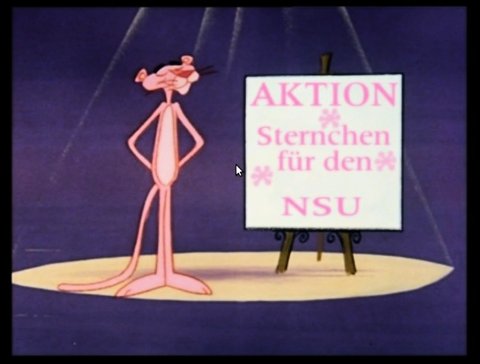
As we know from the news, a group calling itself the National Socialist Underground in Germany killed ten Turkish immigrants - all vendors of disgusting döner kebabs - over the course of ten years, without being detected; they also robbed a bank and killed a female police officer. They made a bizarre video, which has the faces of their victims imposed on a 1960s Pink Panther cartoon (and slogans such as 'Actions, not Words'). Their actions were only discovered recently after two of the men in the gang committed suicide (by shooting each other) and then blowing themselves up with a timed explosive. (A female member turned herself in). The German press has, delightfully, christened the gang 'the Brown Army Faction', and the reactions have been predictable. Merkel has declared herself shocked and ashamed. There will be compensation paid by the German government (the German government is always good for money), a minute's silence in the Bundestag, while members of the German establishment are renewing their calls to ban the NPD and proposing that all German nationalists be registered with the German secret police.

Ironically, the story broke on the fiftieth anniversary of the first Turkish "guest-workers" arriving in Germany. (Turkish immigrants were brought in, as "guests", to fill a supposed labour-shortage; but the guests continued to stay, and now number 3 million - and many of them now find it hard getting any work at all).

The National Socialist Underground were undetected for a long time, and the Turkish immigrants in Germany are arguing that this is proof of an endemic German "racism". This, of course, is an argument against their position. Supposing that the Germans are (as the immigrants imply) a nasty, horrible, "racist" people: why, then, are the millions of Muslim immigrants in the country? Surely, in this instance, you'd want to stay in, and live in, a Muslim country, where you won't get discriminated against for being a Turk or Muslim? But actually, no. To the Turkish immigrants, the purpose of the Bundesrepublik is to protect them from the nasty "Neo-Nazis" and other racists, so their vendors can continue to sell their greasy döners in peace. (As a friend said to me, 'There are SO many Doner Kebab vendors in Germany, its unbelievable that they can all stay in business.  It's easier to get a Kebab in Germany, than actual German food').

The attitude of Germany's Turks reflects the immigrant mentality: they believe they have the "right" to a better life - in a wealthy country like Germany. The fact that they are, by emigrating there in the millions, actually colonising those countries (like the Jewish settlers in Jerusalem and the West Bank) with the effect of dispossessing the indigenous Germans (or British or Swedes), crowding them out of their own cities and reproducing, in those cities and council-housing estates, a downtown Istanbul or Islamabad or Mogadishu, in miniature - is of no concern to them. The white man has to lump it: the immigrant has his "right to a better life", and that's that.

As we know, this emigration is, in the end, counter-productive. There are no magical properties in the German, British, Australian or American soil, which make these countries prosperous, safe, clean; no, these qualities - which are really the virtues of the white nations - come about from the people. Displace the people, and you end up with something like a China, India, Pakistan, Mexico or Congo. (Now, nothing against those countries in particular, but it's evident that literally millions of their inhabitants are desperate to get away from them, and go somewhere else - preferably to a white man's country).

What sticks in the throat of the Germans (or Swedes, or British), is that the immigrants from Pakistan or Somalia don't even make the effort to pretend to like the native inhabitants (I myself have never met a Chinese or Indian immigrant who, while liking Australia, actually admits to liking 'Aussies' themselves). Indeed, it's only a matter of time before the immigrant population starts to make demands - loud demands - that the host country adopt to its ways. In a recent article in The Age newspaper ('Too-white TV must tune in to the real Team Australia', 26/11/2011), a few immigrant "entertainers" declared that Australian TV was 'too white', and that changes needed to be made. (The author writes, 'MORE than 2 million Australians were born in Asia and our Indian-born population has more than trebled in a decade, but mainstream television, other than SBS, rarely reflects this fact'). Presumably, these immigrants can go home to their countries of origin and watch Chinese, and Indian soaps all day long, and feel included that way; but they don't want to. It is we who have to accommodate them.

The irony of the Döner Kebab murders is that the liberal establishment sometimes looks at the murder of Turks, and other non-whites, as a sad necessity. As we know, Israel killed nine Turks on the Gaza flotilla, which was on its way to break the Israeli embargo of Gaza and deliver supplies of nappies, toilet paper and goat meat. As to why they were killed, well, in the disordered mind of the Jewish-Israeli, nappies and goat meat are, in fact, weapons of mass destruction which can be used to murder the poor little Jews of Israel (in the nearby settlement of Ashkalon, for instance). In addition, the sight of anyone wanting to help Israel's chief enemy - the Palestinians - fills Jewish-Israelis with a murderous rage. Hence, the murder of the nine Turks. The liberal establishment makes excuses: 'The Turks were attacking the Israeli commandos with iron bars! The commandos were acting in self-defence!'. But then, suppose that it was Jews who were embargoed by an occupying (Arab or German) army, and Jewish activists, seeking to break that embargo, were shot dead... The Western liberal establishment, despite being ostensibly egalitarian, does categorise peoples according to their worth: and Jewish Israelis, along with Jews in general, are on a higher plane than Turks and other non-whites.

Amusingly, I saw a news item, on SBS, with a story on Palestinian 'freedom-ride' activists, who tried to catch a Jews-only bus to Jerusalem. They were forcibly removed, from the bus, by Jewish-Israeli soldiers, to the approval and delight of the Jewish-Israeli passengers. In the interest of freedom from bias, the news report took up half its time explaining the Israeli point of view: Palestinians had, in the past, blown up buses with Jewish-Israelis; therefore, Palestinians had to be prevented from riding buses with Jewish-Israelis on them. Of course, the Palestinian 'freedom-riders' compared themselves to the heroic Negroes of the US civil rights struggle in the 1960s; but American proponents of segregation could have used exactly the same arguments as the Israeli government in this story (given the fact of interracial, black-on-white crime in the US).

These Palestinian tactics will, over time, prove to be very effective. The activists understand that the civil rights Negroes (along with Mandela) are venerated as gods in the West; they want to drive a wedge between the liberal Westerners and the (now) not-so-liberal lovers of Israel and Jewry. In short, they want to bring this hierarchy - where Jews are placed on a pedestal, above Muslims - to light.

Where, however, does this leave the Germans? The National Socialist Underground are the equivalent of the urban guerrilla, left-wing terrorist groups (such as the Baader-Meinhof gang, or Denmark's pro-Palestinian 'Left Wing Gang'). In their ideology, they more resemble the white nationalists of Robert Jay Matthews and the Order; they are not, so far as I can see, National Socialists: the Third Reich had excellent relations with Turkey (although Turkey never joined the Axis cause), and never suffered from a Turkish immigrant problem.

A friend of mine writes that the purpose of the modern German political establishment 'like any other Western one, is to ensure there IS no Germany, or Italy, or England, or America, or Australia... [The Bundesrepublik] too "Officially" supports the German people but "unofficially" would prefer to see them gone'. That is, the German establishment wants to get rid of the Germans, en masse, and replace them with an immigrant Islamic or African or Indian or Asian population; the same goes for the political establishments in Britain, Australia, etc. Whether or not these respective establishments succeed in their task is another thing altogether. Some countries (like Britain) are bringing in such huge numbers of immigrants that they are actually succeeding in displacing the white inhabitants to an enormous degree (57% of students in schools in England, for example, are now non-white); other countries, like Germany, are, despite their best efforts, not reaching British levels. The point is, the intent - and it is a genocidal intent - is there.

Morally, then, the likes of the National Socialist Underground stand on the same plane as the Palestinians, in the West Bank and Jerusalem, who commit acts of violence against Jewish settlers: violence is the last resort after any negotiations have broken down and attempts at a peaceful resolution have been thwarted. The Western political establishment views all nationalists and racialists and disgusting, filthy creatures. Nationalists are locked out of the political establishment, and out of the political (and intellectual) debates of our age. The German nationalists of the National Socialist Underground, then, felt that they had no choice but to commit violent crimes, which in turn leaves the political establishment feeling validated in their low estimation of nationalists.

It is always fascinating, from an intellectual point of view, watching extremist types - whether of the Far Right or Left - pursuing the logical implications of their ideology to the bitter end. It is also a saddening sight when the efforts of those same extremists are so counter-productive and futile. The Baader-Meinhofs and Red Brigades didn't succeed in their objectives (and, by the end, they seemed somewhat confused as to what their objectives were); the National Socialist Underground, despite its killing the döner vendors, won't put a dent in the 4.3 million-strong Muslim immigrant population. What's more, they may end up making things worse for German nationalism. The West, of course, reveres some terrorists (who make futile, and violent, gestures against repressive regimes - e.g., Mandela); but it comes down hard, especially hard, on right-wing, nationalist terrorists, and non-terrorists on the Far Right suffer too.

To return to my question: are the National Socialist Underground, and the "Neo-Nazis", really National Socialists?

One of my objections to the ideology of "Neo-Nazism" is that it (as in the case of Savitri Devi) puts Hitler and the National Socialists almost at the level of a trans-national religious cult; whereas Hitler and the National Socialists were Germans first, German nationalists second, and National Socialists third. The volunteers who fought in the German army in WWI, or in the Freikorps after WWI, were closer to the true, historical German National Socialism than many of the so-called "Neo-Nazis" of today.

One of the interesting things about the recent European financial crisis is that the old stereotype - of Germany, and the Germans, as the bully, and the bully with the power and the money - has returned, especially in the British media. One has to scan the tabloids daily to find comparisons of Merkel and Sarkozy to Hitler and Petain (the tabloids, of course, intend such comparisons to be offensive, because they are full of a vindictive hatred of the Germans, and the French, in general). All this proves that nations don't deviate much from their national types, no matter who is in charge; the fact that Sarkozy is a French Jew, and Merkel is a German who hates Germans (and daughter of an East German pro-communist priest), makes no difference. Now, in 2011, a powerful bully runs Germany, a toady of Germany runs France, an exhibitionist buffoon (the recently-deposed Berlusconi) runs Italy, while a spluttering, impotent Britain wrings its hands and looks on - all of this looks like the Europe of 1941!

Which raises the question: what if German does revert to type? What if decades of Allied brain-washing, Judaist Holocaust religious propaganda and Bundesrepublik-ism make no difference and the old, pre-1945 Germany feels compelled to reassert itself? This is what the British tabloids, and other commentators, are thinking. You can kidnap a man, and brainwash him, as in the famous movie The Manchurian Candidate (1962); but, after a while, the brainwashing will wear off and that man will revert to who he is - his essence. (And remember, brainwashing, as a method of mind-control, was devised, and first put into practice, by communists). As it is with human beings, so it is with nations: nature triumphs nurture.

I, almost daily, read (in the popular press) sombre ruminations by British commentators, who remind their readers that British policy on the Continent has always been to maintain a 'balance of power' and prevent any country from gathering up all the power for itself. Now that Germany is (under Merkel) accrueing power for itself, the British have to sit up and take note. But all the British can do is isolate themselves, further and further, from the Continental powers, and the EU. All this reminds me of the popular journalism of the 1920s and 1930s.

I myself think that these commentators are right. Because of the geopolitical, and economic, realities, Germany is reverting to the old nationalistic Germany - of Bismarck and Wilhelm II - whether it wants to or not, and despite the best efforts of its anti-German, anti-nationalist political establishment.

If only there were some way to connect the two threads - the realities of Germany's geopolitical position, and the Far Right German nationalism of the NPD: so far, they stand on separate sides of the fence.

I have written here before about how difficult it is for today's nationalist intellectuals to reproduce, exactly, the ideology of a German National Socialism or an Italian Fascism. (The Trotskyites who want to 'bring back' the old pre-Stalin communism have the same difficulty). It is a difficult intellectual exercise simply because so much water has flowed under the bridge. (You may as well try and understand the "original" Christianity of Jesus and his disciples, or the "original" Buddhism). Something happens, in cases like these, is that strange deviations of the doctrine emerge, which have little or no relation to the original. Modern-day Trotskyism, as represented by the Socialist Alliance, Socialist Alternative and other Australian communist groups, has no relation to Trotskyism or even communism. The modern Australian "Trotskyist" platform is: gay marriage, Palestinian nationalism and student rights (plus a dose of 'Free the Refugees'). Trotsky himself would have been baffled.

But what was National Socialism's original doctrine? One of the main components of it was a faith in the German people: that they were a resourceful, hard-working and above all resilient people - given the chance; other nations (and the less said of them, the better) didn't have those qualities. The same qualities stemmed from the people themselves; they weren't magical properties of the German soil. This was Hitler's "racialism", which communists and liberals have found so outrageous (and British nationalists, like the Churchill types, whose nationalism consists of hating, actively, other nations).

One of the reasons why they found it so outrageous was that "racialism" was that, in Hitler's ideology, in order for Germans to be 'given the chance', the Jewish population of Germany had to be booted out of the leading positions it occupied in commerce, academia, politics, the trade union movement, the media; and, furthermore, communism in Germany had to be quashed, for all time. Communism, and Jewry, had plenty of supporters at the time (and still do); these supporters regarded Jewry, and communists, as an inoffensive people undeserving of such a fate.

The German National Socialist doctrines here are logical and self-consistent: one proposition naturally flows from the other. Do they apply, however, to Germany (and Europe) today?

Yes and no. There is, constitutionally, a profound difference between Hitler's Germany and the Bundesrepublik today; there is also a profound spiritual difference - Judaism, Holocaustianism and the worship of the Jewish-Israeli people (all the one and same thing) is the official state-sponsored religion of Germany (and much of the West). But these 'overlays' are superficial. The core of Germany - the German people - is still there; furthermore, that core hasn't changed much since the time of Bismarck or Wilhelm II. The old characteristics of the Germans are popping up again, in the recent financial crisis. As Walter Russell Mead writes, in the Wall Street Journal:

France is basically a Club Med country with some northern features (historically often found among the Huguenots and Jews, out of which communities many of its most successful business leaders have come). It wants a "political" economic system for Europe, one in which political pressures can ensure the kind of steady devaluation of the euro that Italy, Spain, France, Greece and Portugal used to enjoy with their national currencies in the good old pre-euro days. The only problem with this old system was that it gave too many advantages to the Germans, Dutch and others (in the form of lower interest rates). France wants to stick the Germans with a Latin currency and Latin rules for running it.

Germany, on the other hand, wants the Latin countries to live by northern rules: Keep the currency sound, the budgets balanced and let the chips fall where they may. There is zero, repeat, zero consensus in Germany to go Latin and give the euro into the hands of slick French and Italian politicians. Technocrats bound by rules, the Germans can accept: That is why an Italian technocrat is following a Frenchman at the head of the ECB. But that is also why the Germans are being such sticklers about ECB rules against bailouts and unlimited ECB purchases of sovereign bonds.

['The Culture War Over Europe's Money' (subtitled, 'The Germans are richer and more stubborn... The French are flashier and faster on their feet', WSJ, 17/11/2011)].

How redolent this is of the (often crass) generalisations of Hitler's Table Talk and Mein Kampf! And yet, the likes of Mead are not accused of being German nationalists, National Socialists, or NPD-sympathisers.

The problem for the nationalist intellectual (and the German nationalist) is that we have been so deluged with propaganda and misinformation, regarding Hitler, National Socialism and the 'old' Germany (that is, the Germany before the Allied-Soviet occupation), is that we have lost sight of the old Germany - that is, we don't know what it looks like. As well as that, we have distorted perceptions of Hitler and National Socialism. (The opponents of National Socialism - Jewry in particular - are not the only source of these misperceptions. There are the "Neo-Nazis" themselves, who see Hitler as a "saviour of the white race" and a prototypical white nationalist).

Now, of course, the 'old Germany' is starting to come back. For decades, the Germans have been told that any manifestations of German strength are evil - and are the purest, deepest evil known to man; furthermore, Germans have been told that, in any case, they are very weak, and that life under the dreadful Allied-Soviet occupation has made them weak, and that they will continue to be weak for a long time. Now, though, the perception is that Germany is strong, and strong once again. They are exhibiting (according to the commentators in and outside Germany) the same old German virtues - the virtues which, ironically, were lauded by Hitler (e.g., the virtue of resilience - see Hitler's final radio address on January 30, 1945). The modern foes of Germany (among them, the British) see this and are furious: they recognise that, despite Merkel, despite the attempt to dilute, and destroy, the German identity through Turkish immigration and Islam - the old Germany is back.

Which isn't to say that the 'austerity' policies Merkel advocates aren't disastrous: they are. Italy, Spain, Greece, Belgium, France, need strong economic growth to meet the interest payments on their debts, and won't get that growth by raising their taxes to the stratosphere (the taxes are high enough already). Supply-side economic theory predicts that, if a nation starts cutting its tax rates to the levels needed to deliver increased production and commerce, interest rates on national debt will drop - just as they did on US debt in the 1980s (and this was despite the US, under Reagan, running a record deficit for the time). The "Latin" countries of Southern Europe are quite right to reject the austerity measures demanded by Germany and the EU. Furthermore, it is not clear as to why the EU has to use taxpayer's money to prevent bondholder losses (losses which would come about were Greece, Italy or Spain to default).

But the Eurozone is, despite the dire predictions of the financial press, not about to 'break up'. The euro is not collapsing: it is one of the strongest currencies in the world - along with the yen and the pound. And, were any of the Eurozone countries to abandon the euro, they would still have to pay back debts denominated in euros. Greece would be crazy to revert to the drachma (but then, no country in the Eurozone is seriously considering going back to the old national currencies, no matter what the financial press says).

The question is, if my thesis is correct, why, now, are countries such as Germany, France, Britain, Greece, Italy 'reverting to type'? Why didn't they do it years ago? The answer is America - or rather, America's decline in the past ten years. It has exhausted itself fighting two long wars (which aren't over yet) which it could not win, and thereby showed up the myth of American military supremacy. It is no coincidence that its economy took a nosedive around the same time. Political power, as Yockey never tired of saying, is a plenum, the opposite of a vacuum: it fills all available spaces. When power departs from one country, it arrives at another. The dead hand of America has been on Britain, Poland and France since the 1930s, and then all of Western Europe since 1945. Now, though, the grip has loosened somewhat. The nations of Europe are beginning to move around a bit - and rediscover what life was like before America.

Hitler would have attributed America's problems to 'The Jew' - and certainly, Jewish-American policy-makers are responsible for America's foreign policy woes (which will be compounded if America, at Israel's behest, attacks Iran). But Europe's problems - particularly the immigrant problem - are somewhat more complex. What is clear that European nationalism, particularly German nationalism, needs to adopt a new ideology to deal with the new realities. The German nationalists are completely out of step with the changes that are taking place. The NPD and Merkel (who may be voted out at the next election) need to meet in the same room, so to speak. But, at the moment, this is impossible. The Merkels want to Islamify Germany, thereby wiping them out, in order to atone for the "Holocaust"; the NPD want to revise the results of WWII, and throw out the Muslims. Neither can see past these (obviously irreconcilable) differences and see the commonalities - i.e., their shared 'German-ness'.

The quest is on for new political forms. A true German nationalist party would get rid of, not only Bundesrepublik theories and forms, but also the old National Socialism (or the caricature National Socialism has become). Again, this would be impossible for the time being, simply because (in my experience) German nationalists lack the foresight and imagination to do such a thing (but then, Germans have always been such a stubborn people).

But for non-Germans, today's events show the closest thing to an approximation of what the old Germany - before the Allied/Soviet conquest and subjugation of 1945 - looked like. The question is, do we like what we see?