Showing posts with label Merkel. Show all posts

Saturday, November 30, 2019

The Metalstorm: Why some nationalists dislike the Nazis


I.

After the eruption of hostilities in Europe in 1914, the English - and the Americans - produced a torrent of literature denouncing German and 'Prussian' cruelty, aggression, rapacity, militarism, authoritarianism, racial self-aggrandizement, Machtpolitik, Kultur, and war crimes (real or imagined); a hundred years later, this torrent shows no signs of abating. But if the English polemicists and the German nationalists - who wrote rebuttals - agreed on one thing, it was that 'Prussianism', 'Prussian militarism', 'Prussian ethical-socialism' (as Spengler called it), defined the essence of the German national character.

To Spengler, each of the five leading nations of the West - England, Germany, France, Spain and Italy - could be summed up a certain Idea, a style, a culture, and it is this that distinguishes one nation from the other. In much the same way, a certain style of each race - in that most racialist and ethnocentric of sci-fi TV shows, Star Trek - helps us to tell one race apart from another, so much so that one would never mistake a Klingon for a Vulcan, a Romulan for a Ferengi. Of course to a Ferengi or Klingon, all kinds of difference - mainly political - exist within the race, but the casual outside observer hardly sees these: he only sees unity and homogeneity. And this uniformity is determined by the style of the race as much as the genetics.

After Germany's defeat in 1918, venerable German institutions - the German Army, the German General Staff, Junkerdom, and the East Prussian state itself - survived; after Germany's defeat in 1945, they were destroyed. Nothing of them remained, not even the 'Prussian Idea' itself. We see here the complete disappearance of a culture, a style. Only ghosts of it linger: we find fleeting images of it in the first three Star Wars movies, in episodes of Star Trek and Battlestar Galactica, in the multitude of computer and board wargames devoted to WWI and WWII. Pertinent to this subject - the prevalence of Nazi and 'Prussian' types in popular culture - is this comment at Steve Sailer's site:

Having Nazi bad guys in situations where Nazism isn’t at all relevant is just the mark of a lazy writer who can’t be bothered to develop good antagonists on their own. Even in situations where they aren’t actual Nazis, the aesthetic provides a convenient visual shorthand.

In Star Wars we would know the empire was evil just by looking at the officers’ uniforms, which were heavily reminiscent of the uniforms worn by Wehrmacht and SS officers during WW2. Additionally, the peaked caps were shaped like those worn by Imperial Japanese military during the war. Add in the patrician affect of Imperial officers(a lot like the aristocratic manner stereotypical of German officers in movies of that period) and you have instant baddies without having them say or do anything evil. Vader’s helmet was specifically designed to be recall the German stahlhelm.

But times of changed. It seems that American filmmakers no longer want to depict dapper fascists. To judge by the listings of upcoming movies at IMDB.Com, Hollywood seems to have slowed down on the production of one of its staples - the anti-German war propaganda movie: I count only one WWII drama slated for release in 2020.

In the world of politics, outside of entertainment and popular culture, the 'Prussian' - with his monocle, riding crop, long boots, dueling scars, smart uniform, and cap set at a jaunty angle - has ceased to exist. His resurrection was predicted by Yockey on the reasoning that while one can kill a man, one cannot kill an idea: one can lop off the top of a tree, but so long as the tree has roots deep in the soil, it will regrow. But 75 years after the end of WWII, this analogy has been shown to incorrect.

The disappearance of 'Prussianism' violates one of the tenets of geopolitics - that nations almost always revert to type. For the past 75 years, Japan has kept its head down and sought to avoid being noticed, and it shies away from all war and all power-politics. But because of the recent Chinese bellicosity in the South China Sea, smaller nations such as the Philippines and Vietnam are looking to Japan as a protector, and as a result, Japan is being forced to accept the mantle of a leading Asian power. One cannot escape one's geopolitical destiny. But for Germany, this law has been suspended. In all the negotiations between the UK and the EU over Brexit, France has taken the lead: the understanding is that France, and not the faceless EU bureaucracy, which gives voice to the sentiments of the EU, and if Boris Johnson or Theresa May want to parley, they must parley with Emmanuel Macron. Germany has been conspicuous by its absence. One would think that Germany was not the wealthiest and most powerful nation on the Continent, and that it had no opinions on what is the most important question for the EU for the 21st century. The British press, performing its traditional role of stoking British resentment against the Germans, continually tries to goad Germany into making provocative statements on Brexit, but Merkel refuses to take the bait.

II.

The Germans will not be taking up Spengler's 'Prussian Socialism' any time soon. But suppose that certain prerequisites were fulfilled for its return, one of the prerequisites being the election to office of a German nationalist party (such as the AfD): what would happen then? I think we all know the answer. England and America, Israel and Russia, would demand that the results be overturned and 'democracy' restored - otherwise, war.

The world will ignore the calls of the 'international community' for sanctions and war only under one condition: that it ceases to believe or starts to doubt that the Holocaust happened. As part of a public relations campaign for German nationalism, the new German nationalist government could deban all Holocaust Revisionism within Germany's borders and promulgate Revisionism across Europe and the world. It could muster up an international task force of forensic investigators to take examine the 'death camps' of Auschwitz, Treblinka and Sobibor for traces of the poison gas which killed millions of people. If no traces were found, or even if the final report of the investigators was divided on the matter, doubt and confusion would be sowed in the minds of British and American public - the same public which normally would join wholeheartedly the chorus of condemnation of the nationalist Germany.

One can dream: the above scenario at the present seems highly unlikely. The reason for that is that German nationalists, even nationalists of the most populist and civic stripe, are faced with a paradox, and this is: they cannot win power without the help of Holocaust Revisionism, but they cannot disseminate Revisionism unless they win power.

The stalemate can only be broken by a miracle. In the South Park episode 'Are You There God? It's Me, Jesus', God visits Earth and before an assembly of South Park residents, offers to answer one question - any question. One of the South Park children, Stan Marsh, asks a question which is quite trivial. God answers it easily (with His perfect and omniscient knowledge) and then departs the Earth, promising to return in the year 4000, much to everyone's dissatisfaction. Now, suppose that this celestial visitation were to occur today and the question was asked of God, 'Did the Holocaust happen?'. Suppose that God's answer was no, and that Hitler and the NSDAP did not order the extermination of Europe's Jews, did not gas the Jews (or shoot them en masse) and did not kill 60,000, let alone six million, Jews. And then suppose that God's answer was beamed into the minds of every sentient being on Earth: that and only that would bring about the change in the attitude of humanity towards Germany that the German nationalists so sorely need.

This story line - and indeed, it will remain nothing but a story - implies that Holocaust Revisionism constitutes a revelation to the world (and in my daydream above, a divine revelation), but in truth, the world has known, and known for some time, that the Holocaust did not happen. But this understanding has not been acted upon because those in authority will not acknowledge the truth of Revisionism.

When I am speaking of those in authority, I am speaking of three leading groups in particular. These are:

International Jewish groups. If six million did not die, then Jewry would lose its right to Palestine. Jews see the Holocaust as a religious justification, in accordance with ancient Talmudic prophecies, for the recovery of the lost State of Israel.

The Anglo-Conservatives. By 'Anglo-Conservative', I mean American and British conservatives of the Victor Davis Hanson and Rush Limbaugh sort. Usually boomers, they hew to the official party line on WWI and WWII and America's involvement, and they hate German nationalism (of any era) with a vengeance.

Left-wing journalists. If God were to come to Earth (as per my South Park fantasy above) and reveal the truth to the world regarding the Holocaust, the media would simply refuse to report it.

All politics is an activity related to power, Yockey writes, and we would assure the triumph of Revisionism were we were to knock the three groups out of their leading position in the power structure. The question is, how?

III.

It goes without saying that the 'Prussian' is a soldier. This is important for the reason that in German nationalist ideology, politics is tied to war.

The Left takes the same view of politics. One of the dirty secrets of 20th century communism is that no communist won power without waging war beforehand: the successful communists did not win elections in Russia, China, Vietnam, Cuba, they won battles. Stalin, Trotsky, Mao, Tito, Kim Il Sung, Ho Chi Minh, Castro: all commanded soldiers, their example presenting a stark contrast to the anemic leftism of today.

The former left-wing terrorist T. Derbent wrote a classic monograph, 'Categories of Revolutionary Military Policy' (2006), which is a treatise on military science and left-wing politico-military strategy. Much of it can be applied by both the Left and Right: the white nationalists in William Pierce's Turner Diaries (1978), for instance, followed the same strategy as the left-wing urban guerrilla groups operating in the 1960s and 1970s. (Pierce, much to his chagrin, was compared by hostile reviewers to the left-wing Brazilian guerrilla Carlos Marighella).

And this brings us to the heart of the problem. Warfare has changed since the time of Hitler and the Kaiser, Guderian and von Moltke. In the first half of the 20th century, the Germans led the way when it came to warfare, but since then, 'Prussian militarism' and the institution of the General Staff have become archaic, outmoded. This partially explains, to my mind, the success of computer games such as Hearts of Iron IV. Gamers can exercise their 'Prussian' world-conquering urges and live vicariously through it, but they can also return to a distant past which is unlike our present and in some respects qualitatively better.

But in other respects, nationalists see the past as worse than the present. No nationalist in the West wants to see a return to WWI or WWII. Today nationalists see white life as something precious and whites as an endangered species. Our sons are not be sent off to die in wars, and no blood of a white Western man is to be spilled.

And this contravenes National Socialist (and 'Prussian militarist') doctrine. In the wartime book 'The Spoil of Europe' (1941), written by an anti-Nazi, Thomas Reveille, we find an (mostly accurate, to my view) enunciation of the fundamental principles of National Socialism:

The State, according to Hitler, has a twofold domestic task. The first is to ''forge the sword” which shall "secure for the German Volk the land and soil that is due to them on this earth” and "their position as lords of the world.” The second domestic task of the Nazi State is to ensure "the preservation and advancement of a community of physically and spiritually similar living creatures.” This twofold task is to be pursued simultaneously. In case of need, however, the latter should be temporarily sacrificed for the former...

[In order to conquer Europe, Germany needs] The forging of the sword and the creation of an indissolubly unified Germanic community in the existing frontiers of the Reich. The Nazi doctrine always assumes that the sword must be ultimately wielded in order to achieve each major objective...

Germany's mission is to rule the world and to fulfill this by any and all means. Europe is the center of the world. The Reich has obligations to its kith and kin overseas. It has also the imperious duty of making Germany's acquisitions perpetually secure not only by forging a sword for their defense but also by a simultaneous attack, through political disintegration or war, against possible enemies and coalitions. Full account is also taken of obstacles to the process of the continuous outward push of Germandom. 

The white nationalist may like the Volk talk, the talk of blood and soil, and the goal of 'the preservation and advancement of a community of physically and spiritually similar living creatures', which sounds rather like David Lane's slogan of the 14 words. But the 'forging of the sword' frightens the white nationalist, because a war waged by any European or Western nation automatically entails casualties - white casualties. And indeed, not only white nationalists but most European white men object to going to war, possibly because they  understand (more than they did a hundred years ago) what it means. As Steve Sailer writes in 'The Dregs of War', 


I want to mention how this latest phenomenon supports John Mueller’s hypothesis in The Remnants of War (which he should have titled The Dregs of War).

Mueller is the Woody Hayes Professor of National Security Studies at Ohio State. He argues that Kursk-Orel battles between mass armies in open fields are over. If they gave that kind of war, nobody would show up.

His specific examples had to do with the 1990s Balkan Wars, which were portrayed in the press as driven by ancient mass enmities. But Mueller argues that the amount of bloodlust in the overall populations was quite low. The various states had massive problems with draft evasion. Basically, nobody wants to go to a modern battlefield with state of the art weapons because everybody figures they wouldn’t last long in the metalstorm.

Sailer points to the conflict in Ukraine as an example of the new kind of war, a war which differs from WWII: 'The Battle of Stalingrad, it isn’t. So far'.

Because the realities of war have changed, then, the Far Right needs to grope around like the Far Left (as Derbent does in his monograph) for a new politico-military strategy.

IV.

We should keep in mind that the socialist and conservative regimes in Western Europe today were (in the case of France, Holland, Belgium, Germany, Austria, Italy, Norway, and Denmark) installed at the point of a bayonet: the British and Americans waged a ferocious war to 'liberate' them from fascism and Far Right conservatism. It could be that the Far Right, the nationalist Right, in those countries may need to wage another war to win them back: quite possibly, the Merkels and Macrons cannot be pushed out any other way. If that is the case - and keep in mind we are in the new age of the 'dregs of war' - what would that war look like?

Years ago, a poster on 4Chan/Pol detailed a long-running fantasy of his - a fantasy informed by the Terminator movies and other cyberpunk pop culture works. A race of cyborg warriors would time-travel from the future, wage war against the Merkels and Macrons, and free Europe. This post stood out for me, as I  - in a similar science-fiction-ish mood - had indulged in a similar daydream. And at the time it seemed quite logical to me, given the circumstances, that the only army which could take on the liberal establishment and win would be one composed of super-soldiers using a technology far advanced from that of present.

In my scenario, the soldiers would win eschew a direction confrontation with the armies of Europe and avail themselves of Fidel Castro and Che Guevara guerrilla tactics, which, to my mind, would prove to be extremely effective.

Of course I understand that such a war (cyber-war?) can only take place only in the realm of fantasy. But does another way forward exist? Bismarck famously said that politics is the art of the possible, and by this he meant there is more than one path to the fulfillment of a political task. He may have been right in this, but at present, I can only see one possibility - one which is (I admit) quite impossible. 


Saturday, December 31, 2016

Time to get radical again


Hunter Wallace wrote an article with a click-bait-ish title, 'The Trump Honeymoon is Already Over'. My response is as follows. I hope Trump turns on Putin - something which I believe will be inevitable, but won't occur in the first 100 days. As for trade, I hope tariffs stay where they are: we don't want to return to the 1930s and the days of the Smoot-Hawley tariff. On the subject of the economy, Trump's tax cuts and deregulatory bills will lead to an increase in job creation. Shutting the border - to legal and illegal immigration - will help there as well.

Trump disappoints on the subject of Israel. But then, he never pretended to be anything other than a Zionist and a Jew-fawner: look at the debates in the Republican primaries. You can't claim that Trump misrepresented himself.

The same applies to Trump's stance on Afro-Americans and race. Trump very skilfully, during the election campaign, avoided antagonising Afro-Americans, and like a standard Jack Kemp Republican, blamed the problems of Baltimore, Detroit, Chicago and black-majority cities on 'lack of school choice' and 'poor Democratic administration'. A few school vouchers, a few enterprise zones, a few capital gains tax cuts, would make inner city poverty, squalor and crime vanish as if by magic.

Trump ran for the most part as a conventional Republican. The differences between Trumpism and Republicanism lay in three areas: 1) Trump wanted protectionism, 2) he wanted immigration restriction and 3) he didn't want to touch Social Security or social welfare spending. When it came to 3), Trump very shrewdly steered the Republicans back to the center - where they had been at the time of Reagan. He recognised that the Republicans had moved - especially in the past eight years - too far to the Right and that a corrective reorientation was needed.

I think Wallace's article does possess validity insofar that it does reflect an underlying dissatisfaction with Trump on the racialist and nationalist scene: we've come to the realisation that Trump has taken nationalism - you want to call it that - as far as it can go within the arena of electoral politics; one can't go any further than Trump and expect to be elected as head of state. Trump is as good as it gets. The pessimistic conclusion one can draw, then, is that no-one to the right of Trump stands a chance; populists such as Le Pen in France and Petry in Germany can't win.

I came across a gloomy 4Chan thread, 'We have to be prepared for the worst: Germany may re-elect Merkel in 2017', which gives a damning indictment of the liberal democratic electoral system in Germany - and, when you think about it, in the West as a whole. The way some German posters explain it, AfD can't possibly win, and it's more than likely that Merkel will be re-elected.


Anonymous (ID: BkZa/jEM) 12/31/16(Sat)00:02:35

It's difficult to get rid of a chancellor when you don't just have two options.

The options we have are center left (what should be center right cdu), lobbyist left (what should have been center left spd), commie left, pedo hippie left, libtards and then there's AfD. That makes it difficult for parties to get the majority of the votes, so there's usually a coalition and with all parties leaning to the left it's easy to exclude the AfD. Some people might also be afraid of a red red green coalition, "center left", far left, pedo hippie left with (((Martin Schulz))) as chancellor, so they decide to vote CDU, because that increases the chances of a big coalition, CDU+SPD, again with Merkel as chancellor. Even if AfD somehow got enough votes to make any other coalition but CDU+AfD possible, which they don't want, Merkel would still be chancellor.

A Swiss poster puts in:


Anonymous (ID: fOmBdqlJ) 12/31/16(Sat)01:11:58 No.104968253▶

Germ-land is double cucked because the current chancellor is CDU
AfD is making most of its gains from former CDU voters
Thus if AfD becomes stronger due to general redpilling, ironically the majorities shifts towards the far left
This is because nobody will even consider a coalition with the AfD (outcasts) and therefore the next most likely coalition is SPD Linke Greens - thanks to AfD voters!
This is the kind of shit that fuels civil wars

Selznick writes, in The Organizational Weapon - a book I covered in a previous post - how the institutions of civil society can serve the useful purpose of working as a pressure valve on popular discontent. But the electoral system in Germany will in 2017 show itself not to be up to this task: it will be unable direct the anger of the German electorate - or shall we say, the German people, the German Volk - into safe channels (safe from the viewpoint of the German political establishment, that is). The system, as it exists now, is not set up this way.

But this raises some interesting questions. The Weimar constitution was widely criticised for allowing the rise to power of Hitler and the NSDAP, and so the post-war German liberal democrats - who had been installed by the Allies - came up with a constitution, the Grundgesetz, or Basic Law, which was thought to be a vast improvement on the Weimar and completely devoid of the Weimar's flaws. But Merkel, the immigrant invasion and the coming 2017 elections show that the problems of the system can't be solved within the system.

Does this entail, then, riots, revolution, the rise to power of 'fascists', 'Neo-Nazis'? It doesn't, unfortunately; but it will lead to a dull resentment, a slow-burning rage, and the tarnishing of the legitimacy of the Bundesrepublik. This is first time this has happened since 1949.

But this signifies the failure of the Allied project. The Allies conquered Germany in order to impose on it - 'democracy'. Elections, the rule of law, 'freedom', were returned to Germany - at the point of the gun - because, it was believed, these formed part of a political system ('democracy') which was superior to both fascism and communism. 'Democracy' would work well in Germany so long threats to it - from communism, or a resurgent fascism - were contained and neutralised. But these threats to the system were understood to be exogenous - that is, coming from without, not within; the notion that 'democracy', at least as embodied in the Basic Law, could collapse under its own weight was unthinkable. As the years passed, and the Bundesrepublik weathered all challenges, complacency set in. But now, in 2017, German 'democracy' appears to have hit a brick wall: it can't cope with the immigrant invasion and it can't cope with Merkel. And the present impasse can't be blamed on Neo-Nazis and communists - it can only be blamed on the structure of the German party system itself. 'Democracy' in Germany has, dare I say it, failed.

But this has wider implications. Frank Sinatra sang, in New York, New York, 'If I can make it there
/ I can make it anywhere'. I say that if 'democracy' can't make it in Germany, it can't make it anywhere.

Sunday, December 4, 2011

Merkel's National Socialism and 'The Wave' (1981)


This is a codicil to my recent article, Nine Turks Good, Ten Turks Bad. I am finding, in the press commentary, people who agree with the article's main thesis on Germany's national (but not nationalist) resurgence. The title of this article says it all: 'Europe, facing abyss, embraces German might as the only way to save its way of life' (Associated Press, 2/12/2011).

Here are a few choice quotations from that article:

BERLIN (AP) -- For more than half a century, the legacy of World War II has meant that the mere mention of a new rise of German power sent shudders through European nations. Now, Germany is increasingly calling the shots for the entire continent — and few seem to mind.
Polish Foreign Minister Radek Sikorski — whose nation lost millions of people in the Nazi invasion and occupation — shocked many this week when he made a dramatic appeal for greater German influence.
"You know full well that nobody else can do it," he told a largely German audience in Berlin. "I will probably be the first Polish foreign minister in history to say so, but here it is: I fear German power less than I am beginning to fear German inactivity."
And:

Austrian Chancellor Werner Faymann, whose nation often lives in the shadow of its giant northern neighbor, dismissed out of hand any worries about renewed German dominance.
"I'm really happy," he said of Merkel's initiatives for saving Europe.
Some Europeans have also contemplated with horror what would happen if Germany got fed up with Europe's debt shambles and simply walked away.
"What is left of the euro if Germany says goodbye? A house of cards," Lennart Sacredeus, a lawmaker with the Christian Democrats in Sweden's governing coalition, wrote in the newspaper Svenska Dagbladet.
Further:

Finance Minister Francois Baroin this week talked about a "Franco-German political impulse" to save the euro. He noted Germany's economic successes compare favorably to France's debt difficulties, and concluded in a radio interview: "Germany is a model that interests us."
France's political opposition, meanwhile, has attacked Sarkozy for letting Merkel call the shots.
"For months, it's been Madame Merkel who decides and Nicolas Sarkozy who follows," Socialist presidential candidate Francois Hollande said this week.
But Europeans seem increasingly inclined to support Germany's leadership — or at least to go along with it.
"This government is not afraid of Germany," Italian political analyst Sergio Romano said of Rome's new regime of technocrats tasked with solving the nation's debt crisis.
"It hasn't said so explicitly, but would say the same thing Sikorski did: We are more afraid of a powerless Germany than a powerful Germany."
While former Prime Minister Silvio Berlusconi bristled at German interference, new Prime Minister Mario Monti has called the German culture of stability one of its "better exports."
"I have always been considered to be the most German among Italian economists, which I always received as a compliment, but which was rarely meant to be a compliment," Monti said at a recent event.
Does the Bundesrepublik itself like this new state of affairs? Of course not:

German Finance Minister Wolfgang Schaeuble has acknowledged the dilemma, telling foreign correspondents this week in Berlin that the government feels like it's being pulled in opposite directions: criticized by some for not being aggressive enough, and by others for pushing its agenda too strongly.
"I feel like the firefighter," Schaeuble said, "who is being attacked by the arsonist."
This isn't to say that the hapless, bungling Merkel's policies aren't disastrous: they are. It isn't to say, either, that Germany is now a "nationalist" country, which other white nations should emulate: it isn't. What it does prove is that politics is not static. Sovereign countries which were strong once, and then fell into a period of weakness (like Germany and Turkey) can become strong again; countries which were, for a long time, under a period of foreign domination (Tunisia and Egypt) can, of their own accord, throw off the yoke; countries which were, for a long time, pursuing an independent course can, all of a sudden, tilt towards a sovereign foreign power, and then fall into its orbit entirely (Libya after 2003).

All countries have certain geopolitical situations which are peculiar to it, and can't be removed - no matter the dominant ideology. Hungary and Romania, for instance, remained traditional enemies, even after their turn towards communism following the Soviet invasion of 1944-45. There is a kind of DNA, geopolitically speaking, at work here. Hitler, in his Secret Book, goes into great detail regarding the 'geopolitical DNA' of nations such as Germany, France, Russia and Britain. French governments may come and go, he tells us, but French foreign policy ambitions remain the same. Ditto Russia...

One part of the German 'geopolitical DNA' is strength, and a dominating power - that is, a power which tends to dominate the Continent (especially the eastern half). Where does that strength, in the case of Germany, come from? From the 'national virtues', Hitler would say (although he would not use that term), which, in turn, stem from Germany's racial characteristics.

In the post-war period, the Allies, and the Soviets, attempted to brainwash the Germans - and succeeded. They managed to implant a great many false ideas into the heads of Germans (and just about everyone else). One false idea was that the German 'national virtues' never existed, and that Germany's supposed strength - in the military, political and economic realms - was phoney. Hitler and the National Socialists sold the German people (and the world) a false bill of goods. Hitler taught the Germans (what we would today call) 'positive thinking' - but that positive thinking wasn't based on reality. It was all lies. The classic made-for-TV American movie, The Wave (1981), shows that: the teacher in the film, as a classroom experiment, imbues his students with the old "Nazi" virtues - strength, discipline, respect for authority, punctuality, neatness, saluting, uniforms, a willingness to (in Nietzsche's words) 'command and obey'. The students' enthusiasm for their school work improves, as so does the enthusiasm of the school's football team, which becomes dedicated to improving its performance. But, in the end, it's all shown up to be bunk. The football team performs badly, despite all the motivational psychology pumped into its heads, and loses the big game. In the novel, by Morton Rhue, one character explains that all that positive thinking on the part of the football team was fine, but didn't substitute for experience and skills. (Obviously, this lost football game is a metaphor for Germany's military performance in WWII. Similarly, the 2003 German film, The Miracle of Bern, uses a sporting analogy for war. The Germans can't believe that they'll win the World Cup in 1954, because of their defeat in the last war). Naturally, the film The Wave is a liberal anti-fascist classic, which is shown in schools in Germany as an illustration in the evils of fascism. (The film is so useful for that purpose that a German remake appeared in 2008).

Leftists, for as long as leftism has been around, have always been attracted to the idea that man is determined by his material circumstances - i.e., his environment. Change the material circumstances, and you change the man. Hence, certain laws of economics and agriculture are suspended under socialism: workers can produce miraculous results, simply because they are now labouring under a socialist state of affairs (as opposed to a capitalist one); hence the tremendous results, in terms of production, expected by Stalin, Mao and Pol Pot, from their 'five-year plans'. Man is infinitely malleable... All one needs is socialism and relentlessly positive thinking. And Mao, Pol Pot and Stalin were relentless optimists, who hated "defeatists" so much that they had them shot.

To return to the German example. The Left (German and non-German) has always viewed the Germans, particularly under Prussian and National Socialist rule, as a vicious, depraved people: hence its desire to change the German people through a program of indoctrination and "re-education". The German people could be remoulded into a decent, peacable, liberal democratic citizen of Europe, which no longer sought to bully other, smaller European nations - or conquer the world.

So, it was drummed into the heads of the German people, again and again, that Hitler's ideas - regarding the German 'national virtues' were just motivational psychology, 'master race' bunk and self-deception. The Germans were never as strong, or talented, or resourceful, or hard-working, as Hitler said they were. But the Germans, in the 1930s, believed Hitler, and so became swollen with pride. When a nation like Germany becomes convinced that it can run Czechoslovakia or Poland better than the Czechs or Poles can - well, it's a slippery slope to invasion, annexation and war. (The same goes for the swell-headed Italians, who had the temerity to believe that Italians could run Ethopia better than the Ethiopians). Obviously, decent nations have to unite and knock the stuffing out of Germany, and then re-educate it.

It's a simple narrative, this one, and it has a million holes in it. But, for decades, it was believed, and for one reason only: Germany lost the war. The proof is in the pudding, and the undeniable fact that Germany lost shows that Germany wasn't good enough. Germany's early successes were flukes, but, in the end, it was ground down by Allied military and industrial might. This is despite all the German military's undoubted skill, tenacity, bravery (and even liberal, anti-German commentators state that the German military possessed these qualities).

In Germany and Europe since the war, there have been two ideas: one is that Germany doesn't deserve to lead Europe (or at least, the Continent); the other is that Germany is weak and can't lead. The latter idea has now, in 2011, been blown out of the water.

To understand why, we have to take a detour into the history of left-wing theory.

Stalin's collectivisation of the Ukraine and southern Russia, Mao's Great Leap Forward, Pol Pot's plan to boost Cambodian rice output to extraordinary levels, all failed, because, in the main, they ignored the realities of human nature. Which is to say, the Left has long been used to ignoring reality, shutting out facts which don't fit their theses, and suppressing those who happen to think differently. Indeed, critics are castigated as doomsayers, reactionaries and pawns of capitalism - or agents in the pay of foreign powers. (One can see, of course, the similarities between the communists and today's Left, in how they treat dissenters. In one era, they repressed, violently, the critics of collectivisation; in today's era, the critics of multiculturalism).

The Left ignores the reality of race, and 'national virtues', all the time, of course. Racialists may allege that x, certain ethnic group (which I won't name here), has certain racial characteristics: a tendency to violent crime; alcoholism; drug abuse; mendacity and welfare dependency; having children out of wedlock; low levels of educational and professional attainment; living in filthy and squalid surroundings (which they make filthy and squalid); etc. Leftists will angrily reject such negative characterisations, and put them down to white supremacist propaganda: in effect, whites, and "capitalism", put out lies, regarding this particular x ethnic group, in order to oppress and exploit them. In other words, it's a case of whites attempting to brainwash x ethnic group - and attempting to brainwash themselves, Hitler-style, by telling themselves that they are somehow a racially superior group, another "master race". (The Left tells us that these stories of race-supremacy are "capitalism". Race-supremacy fills whites with a false pride and sense of superiority, and so legitimates the oppression and subjugation of x ethnic group. This is a swindle, which prevents working-class whites from overthrowing their oppressors, the capitalists).

The realities of race, however, are quite different. Common sense tells us that whites, and x, are very different, in the aggregate. One doesn't need statistics on brain and skull size, or IQs, or even crime and educational attainment, to show this: everyday life shows it. One merely has to go to a country where whites and x racial group live together. The true nature of x as a racial group 'bursts through'.

The post-war indoctrination of Germany was very much a left-wing project: the fact that Americans took part in it so enthusiastically shows us to the extent to which Americans, and communists, are alike (as Alex Kurtagic says, Americans have always been liberals, and America's "conservatives", who idolise George Washington, Thomas Jefferson and Benjamin Franklin, idolise liberals). But, just as in my hypothetical example of racial minority x, the true nature of Germans, as a racial and national group, bursts through. It turns out that Germany is a strong nation, and a leader, after all.

A global call for the use of German power was not what anybody thought they would ever hear again. And Germans themselves are only slowly waking up to the fact that they are now seen as Europe’s “indispensable power,” as the historian Timothy Garton Ash wrote. So grave is the crisis of the common currency that it now represents the third moment in 100 years when Germany has unilaterally determined the fate of Europe — after 1914 and 1939. It’s that history that weighs on German action or inaction.
['Why isn't Germany stepping up to save the euro zone?', The Washington Post, 2/12/11]
The Germany they are speaking of here isn't Turkish, or Muslim, Germany, of course. So maybe Hitler - who had an enduring faith in the German people, right to the end of the war - wasn't so wrong after all. Maybe Germans do possess strength, despite their appalling political leaders. Facts will out, reality will out, and no amount of leftist indoctrination and double-talk will change that.

But, one may say, isn't this just economics? The victors of WWII - America and Britain - are economically weak. But, supposing that the American economy picks up again? Won't Germany be relegated (again) to second-class status? Won't Turkey, Egypt, Tunisia, drift back into the American-Israeli sphere of influence?

This is a good question. It's true that the Americans (in the 20th century) seemed to have nine lives. America went through a catastrophic period of weakness following its defeat in Indochina in the 1970s. Then Reagan was elected and steered the country to greatness again. Half of Germany, and all of Eastern Europe, fell into the American sphere without a shot being fired. American, and Israeli, power soared to undreamed-of heights in the late 1990s (as did the American stock market - this is no coincidence). America, by the late 1990s, built a global 'co-prosperity' sphere. The American example showed that, if you wanted to succeed, you had to become part of the American economic system. Even Russia and China had to become part of that system. The only alternative was mass impoverishment and starvation along North Korean lines.

It's clear that many American "conservatives" (and many Americans, full stop) are hoping for a Reagan moment - that is, for a new national saviour to appear. (The eighties, in the West, were a time for messianic politicians: Reagan, Thatcher, Hawke, viewed themselves as national saviours, redeeming their countries from ruin). Economic and geopolitical power are intertwined, and it's possible that another US president may cut taxes (especially capital gains taxes) and trigger off another huge economic boom, like Reagan and Clinton in the 1980s and late 1990s respectively. That is, Americans are very good at making money (this is one of their 'national virtues') and may, in this scenario, get on top again. Reagan and Clinton understood, intuitively, that tax barriers stood in the way of Americans trading and investing; so the answer was to lower those barriers. They also understood that strong economic growth was the best propaganda for the American political (and economic) system. Obama, of course, doesn't understand this, which is why he's been such a dismal failure.

As to whether Obama will be replaced by a new Reagan or Clinton is another story. I myself am divided as to the merits of an American economic revival. On the one hand, I don't like to see my fellow whites in America suffer from growing impoverishment and unemployment; I also happen to have an (intellectual) dislike of the Keynesian and monetarist schools of economics which Obama represents; on the other hand, I don't want to see a strong America, or Israel.

(Will a revived America, a new American ascendancy, hurt nationalism? There is an old, left-wing myth (one which liberals have adopted) that the nationalist vote goes down in periods of prosperity, and up in periods of recession. The media repeats this cliché again and again, but is it true? Surely the vote for the German NPD, or the British National Party, was better years ago - when their respective countries were doing better, economically?).

What is at stake here are two competing economic systems: an American 'co-prosperity sphere' and a European (that is, German, or Franco-German). The American sphere dominates the world, and when the American-Tel Aviv axis is politically strong, opting out of the American 'co-prosperity sphere' seems insane. Which is why, among other reasons, European nationalist parties such as the NPD appear to the average European as being quite out of touch with reality. That is, the idea that Europe could turn back to the wartime, Hitlerian economic system, during 1940-1945, seems ludicrous. This is even though the German-led system, at the time, was quite successful (the liberal, communist and Jewish coalition of anti-German propagandists will insist that that economic system was all built on slave labour and the pilfering of gold teeth from the mouths of gassed Jews; but we can take these stories with a grain of salt). Now, though, a German-led system doesn't seem like such a crazy idea: in fact, it is becoming a reality (and the inception of the EU, and the euro, laid the foundation for that reality). This is not because the German economy is so strong (and Merkel's policies are poison, economically speaking); it's just that it is strong relative to the rest of Europe right now. And this is without any swastikas, jackboots, invasions of Poland and the rest. Germany has reached this position by default. Germany always was a strong country, Germans always were a hard-working, disciplined, conscientious, productive and technologically-innovative people; the old realities have reasserted themselves.

We can see the UK's predicament. The UK, of course, always has had a strong aversion to the idea of one country dominating the Continent. In the 1920s, it was France; in the 1930s and 1940s, Germany. Which is why certain segments of the British political class (including the British Far Right, e.g., Enoch Powell) were extremely hostile to the EU from the beginning. They realised that Europe, over time, become a centralised power under Belgian, French and German rule; then French and German rule; then German rule. And, following that, an alternative economic system - an alternative to the dominant 'Atlanticist' one - would appear.

Australia's problem, of course, is not Germany and the Continent, but Asia: that is, fear of either Chinese or Japanese domination, either through Chinese labour, Japanese capital or (now in 2011) Chinese labour and capital. But, assuming that all nations revert to their geopolitical DNA, so to speak, Australia will eventually revert to type - and adopt economic and political policies towards Asia in accord with those of the past. There is hope.

But what of America (and Israel's) prospects? It is impossible to predict the future in politics with any degree of accuracy, but... My guess is that America, and Israel, right now, are down for the count and down for good. Either Obama will be re-elected, and America will continue its decline; or some 'consensus' Republican candidate, such as Romney, will be elected and continue the same anti-growth economic policies as Obama. (Romney's economic platform really is mediocre, and is derided by many right-wing economic commentators). It is true that the American electorate is intolerant of failure, and tends to take chances on untested candidates during times of uncertainty (which is why Obama was elected). There is a possibility that a new Reagan or Clinton may spring out of the woodwork. On the other hand, perhaps natural justice is asserting itself... American economic and military strength, which won the war for them (and dominance over Western Europe and most of Asia), was based on the Anglo-Saxon virtues and the gold standard; once it abandoned both (and it now has definitely abandoned both), it fell into decline.

Possibly, America will be Brazilianised in the future. That is, it will become a pyramidal society with a Hispanic majority, a Black and (native American) Indian underclass, and a small white minority (with Jewish-Americans at the top); there will be favelas (Brazilian shanty towns, full of Hispanics, poverty, crime, gangs, and squalor) everywhere.

The question then becomes: does Europe (and the West) want what America stands for now - Wal-Mart and Zionism? Or is there something else? The question then becomes one of a choice, not between two economic systems (Anglo-Saxon capitalism or 'European style' socialism) but between two contrasting ways of life...

Saturday, November 26, 2011

Nine Turks good, ten Turks bad: the Gaza flotilla, the Döner Kebab murders and the future of Germany

I have a nationalist friend who refuses to discuss the recent news story - of the 'Döner Kebab Murders' in Germany - on the phone. He is convinced that the secret police are tapping his phone, and will use whatever comments he makes to arrest him, and frame him, for the idea of supporting a 'Döner Kebab' copycat murder spree: while (rest assured) he never will murder any döner kebab vendors, he wouldn't put it past the state to frame him for wanting to do so.

This is unlikely. Suppose that two members of the Trotskyite-communist Socialist Alliance were discussing the latest outrages by the Colombian FARC, or the Indian Maoists - would they be arrested and framed for plotting acts of left-wing violence? But such is the paranoia on the Far Right.

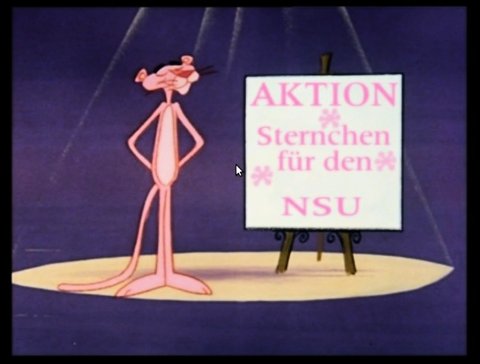
As we know from the news, a group calling itself the National Socialist Underground in Germany killed ten Turkish immigrants - all vendors of disgusting döner kebabs - over the course of ten years, without being detected; they also robbed a bank and killed a female police officer. They made a bizarre video, which has the faces of their victims imposed on a 1960s Pink Panther cartoon (and slogans such as 'Actions, not Words'). Their actions were only discovered recently after two of the men in the gang committed suicide (by shooting each other) and then blowing themselves up with a timed explosive. (A female member turned herself in). The German press has, delightfully, christened the gang 'the Brown Army Faction', and the reactions have been predictable. Merkel has declared herself shocked and ashamed. There will be compensation paid by the German government (the German government is always good for money), a minute's silence in the Bundestag, while members of the German establishment are renewing their calls to ban the NPD and proposing that all German nationalists be registered with the German secret police.

Ironically, the story broke on the fiftieth anniversary of the first Turkish "guest-workers" arriving in Germany. (Turkish immigrants were brought in, as "guests", to fill a supposed labour-shortage; but the guests continued to stay, and now number 3 million - and many of them now find it hard getting any work at all).

The National Socialist Underground were undetected for a long time, and the Turkish immigrants in Germany are arguing that this is proof of an endemic German "racism". This, of course, is an argument against their position. Supposing that the Germans are (as the immigrants imply) a nasty, horrible, "racist" people: why, then, are the millions of Muslim immigrants in the country? Surely, in this instance, you'd want to stay in, and live in, a Muslim country, where you won't get discriminated against for being a Turk or Muslim? But actually, no. To the Turkish immigrants, the purpose of the Bundesrepublik is to protect them from the nasty "Neo-Nazis" and other racists, so their vendors can continue to sell their greasy döners in peace. (As a friend said to me, 'There are SO many Doner Kebab vendors in Germany, its unbelievable that they can all stay in business.  It's easier to get a Kebab in Germany, than actual German food').

The attitude of Germany's Turks reflects the immigrant mentality: they believe they have the "right" to a better life - in a wealthy country like Germany. The fact that they are, by emigrating there in the millions, actually colonising those countries (like the Jewish settlers in Jerusalem and the West Bank) with the effect of dispossessing the indigenous Germans (or British or Swedes), crowding them out of their own cities and reproducing, in those cities and council-housing estates, a downtown Istanbul or Islamabad or Mogadishu, in miniature - is of no concern to them. The white man has to lump it: the immigrant has his "right to a better life", and that's that.

As we know, this emigration is, in the end, counter-productive. There are no magical properties in the German, British, Australian or American soil, which make these countries prosperous, safe, clean; no, these qualities - which are really the virtues of the white nations - come about from the people. Displace the people, and you end up with something like a China, India, Pakistan, Mexico or Congo. (Now, nothing against those countries in particular, but it's evident that literally millions of their inhabitants are desperate to get away from them, and go somewhere else - preferably to a white man's country).

What sticks in the throat of the Germans (or Swedes, or British), is that the immigrants from Pakistan or Somalia don't even make the effort to pretend to like the native inhabitants (I myself have never met a Chinese or Indian immigrant who, while liking Australia, actually admits to liking 'Aussies' themselves). Indeed, it's only a matter of time before the immigrant population starts to make demands - loud demands - that the host country adopt to its ways. In a recent article in The Age newspaper ('Too-white TV must tune in to the real Team Australia', 26/11/2011), a few immigrant "entertainers" declared that Australian TV was 'too white', and that changes needed to be made. (The author writes, 'MORE than 2 million Australians were born in Asia and our Indian-born population has more than trebled in a decade, but mainstream television, other than SBS, rarely reflects this fact'). Presumably, these immigrants can go home to their countries of origin and watch Chinese, and Indian soaps all day long, and feel included that way; but they don't want to. It is we who have to accommodate them.

The irony of the Döner Kebab murders is that the liberal establishment sometimes looks at the murder of Turks, and other non-whites, as a sad necessity. As we know, Israel killed nine Turks on the Gaza flotilla, which was on its way to break the Israeli embargo of Gaza and deliver supplies of nappies, toilet paper and goat meat. As to why they were killed, well, in the disordered mind of the Jewish-Israeli, nappies and goat meat are, in fact, weapons of mass destruction which can be used to murder the poor little Jews of Israel (in the nearby settlement of Ashkalon, for instance). In addition, the sight of anyone wanting to help Israel's chief enemy - the Palestinians - fills Jewish-Israelis with a murderous rage. Hence, the murder of the nine Turks. The liberal establishment makes excuses: 'The Turks were attacking the Israeli commandos with iron bars! The commandos were acting in self-defence!'. But then, suppose that it was Jews who were embargoed by an occupying (Arab or German) army, and Jewish activists, seeking to break that embargo, were shot dead... The Western liberal establishment, despite being ostensibly egalitarian, does categorise peoples according to their worth: and Jewish Israelis, along with Jews in general, are on a higher plane than Turks and other non-whites.

Amusingly, I saw a news item, on SBS, with a story on Palestinian 'freedom-ride' activists, who tried to catch a Jews-only bus to Jerusalem. They were forcibly removed, from the bus, by Jewish-Israeli soldiers, to the approval and delight of the Jewish-Israeli passengers. In the interest of freedom from bias, the news report took up half its time explaining the Israeli point of view: Palestinians had, in the past, blown up buses with Jewish-Israelis; therefore, Palestinians had to be prevented from riding buses with Jewish-Israelis on them. Of course, the Palestinian 'freedom-riders' compared themselves to the heroic Negroes of the US civil rights struggle in the 1960s; but American proponents of segregation could have used exactly the same arguments as the Israeli government in this story (given the fact of interracial, black-on-white crime in the US).

These Palestinian tactics will, over time, prove to be very effective. The activists understand that the civil rights Negroes (along with Mandela) are venerated as gods in the West; they want to drive a wedge between the liberal Westerners and the (now) not-so-liberal lovers of Israel and Jewry. In short, they want to bring this hierarchy - where Jews are placed on a pedestal, above Muslims - to light.

Where, however, does this leave the Germans? The National Socialist Underground are the equivalent of the urban guerrilla, left-wing terrorist groups (such as the Baader-Meinhof gang, or Denmark's pro-Palestinian 'Left Wing Gang'). In their ideology, they more resemble the white nationalists of Robert Jay Matthews and the Order; they are not, so far as I can see, National Socialists: the Third Reich had excellent relations with Turkey (although Turkey never joined the Axis cause), and never suffered from a Turkish immigrant problem.

A friend of mine writes that the purpose of the modern German political establishment 'like any other Western one, is to ensure there IS no Germany, or Italy, or England, or America, or Australia... [The Bundesrepublik] too "Officially" supports the German people but "unofficially" would prefer to see them gone'. That is, the German establishment wants to get rid of the Germans, en masse, and replace them with an immigrant Islamic or African or Indian or Asian population; the same goes for the political establishments in Britain, Australia, etc. Whether or not these respective establishments succeed in their task is another thing altogether. Some countries (like Britain) are bringing in such huge numbers of immigrants that they are actually succeeding in displacing the white inhabitants to an enormous degree (57% of students in schools in England, for example, are now non-white); other countries, like Germany, are, despite their best efforts, not reaching British levels. The point is, the intent - and it is a genocidal intent - is there.

Morally, then, the likes of the National Socialist Underground stand on the same plane as the Palestinians, in the West Bank and Jerusalem, who commit acts of violence against Jewish settlers: violence is the last resort after any negotiations have broken down and attempts at a peaceful resolution have been thwarted. The Western political establishment views all nationalists and racialists and disgusting, filthy creatures. Nationalists are locked out of the political establishment, and out of the political (and intellectual) debates of our age. The German nationalists of the National Socialist Underground, then, felt that they had no choice but to commit violent crimes, which in turn leaves the political establishment feeling validated in their low estimation of nationalists.

It is always fascinating, from an intellectual point of view, watching extremist types - whether of the Far Right or Left - pursuing the logical implications of their ideology to the bitter end. It is also a saddening sight when the efforts of those same extremists are so counter-productive and futile. The Baader-Meinhofs and Red Brigades didn't succeed in their objectives (and, by the end, they seemed somewhat confused as to what their objectives were); the National Socialist Underground, despite its killing the döner vendors, won't put a dent in the 4.3 million-strong Muslim immigrant population. What's more, they may end up making things worse for German nationalism. The West, of course, reveres some terrorists (who make futile, and violent, gestures against repressive regimes - e.g., Mandela); but it comes down hard, especially hard, on right-wing, nationalist terrorists, and non-terrorists on the Far Right suffer too.

To return to my question: are the National Socialist Underground, and the "Neo-Nazis", really National Socialists?

One of my objections to the ideology of "Neo-Nazism" is that it (as in the case of Savitri Devi) puts Hitler and the National Socialists almost at the level of a trans-national religious cult; whereas Hitler and the National Socialists were Germans first, German nationalists second, and National Socialists third. The volunteers who fought in the German army in WWI, or in the Freikorps after WWI, were closer to the true, historical German National Socialism than many of the so-called "Neo-Nazis" of today.

One of the interesting things about the recent European financial crisis is that the old stereotype - of Germany, and the Germans, as the bully, and the bully with the power and the money - has returned, especially in the British media. One has to scan the tabloids daily to find comparisons of Merkel and Sarkozy to Hitler and Petain (the tabloids, of course, intend such comparisons to be offensive, because they are full of a vindictive hatred of the Germans, and the French, in general). All this proves that nations don't deviate much from their national types, no matter who is in charge; the fact that Sarkozy is a French Jew, and Merkel is a German who hates Germans (and daughter of an East German pro-communist priest), makes no difference. Now, in 2011, a powerful bully runs Germany, a toady of Germany runs France, an exhibitionist buffoon (the recently-deposed Berlusconi) runs Italy, while a spluttering, impotent Britain wrings its hands and looks on - all of this looks like the Europe of 1941!

Which raises the question: what if German does revert to type? What if decades of Allied brain-washing, Judaist Holocaust religious propaganda and Bundesrepublik-ism make no difference and the old, pre-1945 Germany feels compelled to reassert itself? This is what the British tabloids, and other commentators, are thinking. You can kidnap a man, and brainwash him, as in the famous movie The Manchurian Candidate (1962); but, after a while, the brainwashing will wear off and that man will revert to who he is - his essence. (And remember, brainwashing, as a method of mind-control, was devised, and first put into practice, by communists). As it is with human beings, so it is with nations: nature triumphs nurture.

I, almost daily, read (in the popular press) sombre ruminations by British commentators, who remind their readers that British policy on the Continent has always been to maintain a 'balance of power' and prevent any country from gathering up all the power for itself. Now that Germany is (under Merkel) accrueing power for itself, the British have to sit up and take note. But all the British can do is isolate themselves, further and further, from the Continental powers, and the EU. All this reminds me of the popular journalism of the 1920s and 1930s.

I myself think that these commentators are right. Because of the geopolitical, and economic, realities, Germany is reverting to the old nationalistic Germany - of Bismarck and Wilhelm II - whether it wants to or not, and despite the best efforts of its anti-German, anti-nationalist political establishment.

If only there were some way to connect the two threads - the realities of Germany's geopolitical position, and the Far Right German nationalism of the NPD: so far, they stand on separate sides of the fence.

I have written here before about how difficult it is for today's nationalist intellectuals to reproduce, exactly, the ideology of a German National Socialism or an Italian Fascism. (The Trotskyites who want to 'bring back' the old pre-Stalin communism have the same difficulty). It is a difficult intellectual exercise simply because so much water has flowed under the bridge. (You may as well try and understand the "original" Christianity of Jesus and his disciples, or the "original" Buddhism). Something happens, in cases like these, is that strange deviations of the doctrine emerge, which have little or no relation to the original. Modern-day Trotskyism, as represented by the Socialist Alliance, Socialist Alternative and other Australian communist groups, has no relation to Trotskyism or even communism. The modern Australian "Trotskyist" platform is: gay marriage, Palestinian nationalism and student rights (plus a dose of 'Free the Refugees'). Trotsky himself would have been baffled.

But what was National Socialism's original doctrine? One of the main components of it was a faith in the German people: that they were a resourceful, hard-working and above all resilient people - given the chance; other nations (and the less said of them, the better) didn't have those qualities. The same qualities stemmed from the people themselves; they weren't magical properties of the German soil. This was Hitler's "racialism", which communists and liberals have found so outrageous (and British nationalists, like the Churchill types, whose nationalism consists of hating, actively, other nations).

One of the reasons why they found it so outrageous was that "racialism" was that, in Hitler's ideology, in order for Germans to be 'given the chance', the Jewish population of Germany had to be booted out of the leading positions it occupied in commerce, academia, politics, the trade union movement, the media; and, furthermore, communism in Germany had to be quashed, for all time. Communism, and Jewry, had plenty of supporters at the time (and still do); these supporters regarded Jewry, and communists, as an inoffensive people undeserving of such a fate.

The German National Socialist doctrines here are logical and self-consistent: one proposition naturally flows from the other. Do they apply, however, to Germany (and Europe) today?

Yes and no. There is, constitutionally, a profound difference between Hitler's Germany and the Bundesrepublik today; there is also a profound spiritual difference - Judaism, Holocaustianism and the worship of the Jewish-Israeli people (all the one and same thing) is the official state-sponsored religion of Germany (and much of the West). But these 'overlays' are superficial. The core of Germany - the German people - is still there; furthermore, that core hasn't changed much since the time of Bismarck or Wilhelm II. The old characteristics of the Germans are popping up again, in the recent financial crisis. As Walter Russell Mead writes, in the Wall Street Journal:

France is basically a Club Med country with some northern features (historically often found among the Huguenots and Jews, out of which communities many of its most successful business leaders have come). It wants a "political" economic system for Europe, one in which political pressures can ensure the kind of steady devaluation of the euro that Italy, Spain, France, Greece and Portugal used to enjoy with their national currencies in the good old pre-euro days. The only problem with this old system was that it gave too many advantages to the Germans, Dutch and others (in the form of lower interest rates). France wants to stick the Germans with a Latin currency and Latin rules for running it.

Germany, on the other hand, wants the Latin countries to live by northern rules: Keep the currency sound, the budgets balanced and let the chips fall where they may. There is zero, repeat, zero consensus in Germany to go Latin and give the euro into the hands of slick French and Italian politicians. Technocrats bound by rules, the Germans can accept: That is why an Italian technocrat is following a Frenchman at the head of the ECB. But that is also why the Germans are being such sticklers about ECB rules against bailouts and unlimited ECB purchases of sovereign bonds.

['The Culture War Over Europe's Money' (subtitled, 'The Germans are richer and more stubborn... The French are flashier and faster on their feet', WSJ, 17/11/2011)].

How redolent this is of the (often crass) generalisations of Hitler's Table Talk and Mein Kampf! And yet, the likes of Mead are not accused of being German nationalists, National Socialists, or NPD-sympathisers.

The problem for the nationalist intellectual (and the German nationalist) is that we have been so deluged with propaganda and misinformation, regarding Hitler, National Socialism and the 'old' Germany (that is, the Germany before the Allied-Soviet occupation), is that we have lost sight of the old Germany - that is, we don't know what it looks like. As well as that, we have distorted perceptions of Hitler and National Socialism. (The opponents of National Socialism - Jewry in particular - are not the only source of these misperceptions. There are the "Neo-Nazis" themselves, who see Hitler as a "saviour of the white race" and a prototypical white nationalist).

Now, of course, the 'old Germany' is starting to come back. For decades, the Germans have been told that any manifestations of German strength are evil - and are the purest, deepest evil known to man; furthermore, Germans have been told that, in any case, they are very weak, and that life under the dreadful Allied-Soviet occupation has made them weak, and that they will continue to be weak for a long time. Now, though, the perception is that Germany is strong, and strong once again. They are exhibiting (according to the commentators in and outside Germany) the same old German virtues - the virtues which, ironically, were lauded by Hitler (e.g., the virtue of resilience - see Hitler's final radio address on January 30, 1945). The modern foes of Germany (among them, the British) see this and are furious: they recognise that, despite Merkel, despite the attempt to dilute, and destroy, the German identity through Turkish immigration and Islam - the old Germany is back.

Which isn't to say that the 'austerity' policies Merkel advocates aren't disastrous: they are. Italy, Spain, Greece, Belgium, France, need strong economic growth to meet the interest payments on their debts, and won't get that growth by raising their taxes to the stratosphere (the taxes are high enough already). Supply-side economic theory predicts that, if a nation starts cutting its tax rates to the levels needed to deliver increased production and commerce, interest rates on national debt will drop - just as they did on US debt in the 1980s (and this was despite the US, under Reagan, running a record deficit for the time). The "Latin" countries of Southern Europe are quite right to reject the austerity measures demanded by Germany and the EU. Furthermore, it is not clear as to why the EU has to use taxpayer's money to prevent bondholder losses (losses which would come about were Greece, Italy or Spain to default).

But the Eurozone is, despite the dire predictions of the financial press, not about to 'break up'. The euro is not collapsing: it is one of the strongest currencies in the world - along with the yen and the pound. And, were any of the Eurozone countries to abandon the euro, they would still have to pay back debts denominated in euros. Greece would be crazy to revert to the drachma (but then, no country in the Eurozone is seriously considering going back to the old national currencies, no matter what the financial press says).

The question is, if my thesis is correct, why, now, are countries such as Germany, France, Britain, Greece, Italy 'reverting to type'? Why didn't they do it years ago? The answer is America - or rather, America's decline in the past ten years. It has exhausted itself fighting two long wars (which aren't over yet) which it could not win, and thereby showed up the myth of American military supremacy. It is no coincidence that its economy took a nosedive around the same time. Political power, as Yockey never tired of saying, is a plenum, the opposite of a vacuum: it fills all available spaces. When power departs from one country, it arrives at another. The dead hand of America has been on Britain, Poland and France since the 1930s, and then all of Western Europe since 1945. Now, though, the grip has loosened somewhat. The nations of Europe are beginning to move around a bit - and rediscover what life was like before America.

Hitler would have attributed America's problems to 'The Jew' - and certainly, Jewish-American policy-makers are responsible for America's foreign policy woes (which will be compounded if America, at Israel's behest, attacks Iran). But Europe's problems - particularly the immigrant problem - are somewhat more complex. What is clear that European nationalism, particularly German nationalism, needs to adopt a new ideology to deal with the new realities. The German nationalists are completely out of step with the changes that are taking place. The NPD and Merkel (who may be voted out at the next election) need to meet in the same room, so to speak. But, at the moment, this is impossible. The Merkels want to Islamify Germany, thereby wiping them out, in order to atone for the "Holocaust"; the NPD want to revise the results of WWII, and throw out the Muslims. Neither can see past these (obviously irreconcilable) differences and see the commonalities - i.e., their shared 'German-ness'.

The quest is on for new political forms. A true German nationalist party would get rid of, not only Bundesrepublik theories and forms, but also the old National Socialism (or the caricature National Socialism has become). Again, this would be impossible for the time being, simply because (in my experience) German nationalists lack the foresight and imagination to do such a thing (but then, Germans have always been such a stubborn people).

But for non-Germans, today's events show the closest thing to an approximation of what the old Germany - before the Allied/Soviet conquest and subjugation of 1945 - looked like. The question is, do we like what we see?